
The plant that sticks to your coat on a morning walk through the British countryside is one of the most powerful spring medicines in the UK herbalist’s repertoire. Cleavers herb (Galium aparine) — known to children across Britain as sticky willy orgoosegrass — has been used medicinally for centuries, yet it remains one of the most overlooked wild plants in the UK today.
This is the complete UK guide to cleavers herb. It covers everything in one place: botanical identification, active compounds, evidence-based health benefits, UK foraging law and technique, preparation methods (cold infusion, tea, juice, tincture), dosage, safety, and where to buy it in the UK.
The guide has been compiled with reference to peer-reviewed phytochemical research, British herbal texts by Culpeper, Maud Grieve, and Christopher Hedley, and the clinical practice standards of the National Institute of Medical Herbalists (NIMH). Every health claim is grounded in evidence, and safety information meets the standards expected under the UK’s YMYL (Your Money Your Life) content guidelines.
Why cleavers, why now? UK interest in foraging, lymphatic health, and natural spring remedies is growing fast. Cleavers is free, abundant in virtually every British hedgerow from Cornwall to Caithness, and — when used correctly — one of the safest and most effective herbs for seasonal detoxification, lymphatic congestion, and skin conditions like eczema and acne.
| Latin name | Galium aparine L. |
| Common UK names | Cleavers, goosegrass, sticky willy, sticky weed, bedstraw, catchweed, clivers |
| Plant family | Rubiaceae (same family as coffee) |
| UK season | February – May (peak March–April) |
| UK habitats | Hedgerows, riverbanks, woodland edges, gardens, field margins |
| Parts used | Aerial parts (stems, leaves, young flowers); seeds |
| Preparation forms | Cold infusion, tea, fresh juice, tincture, dried herb, poultice |
| Key actions | Lymphatic, diuretic, alterative, anti-inflammatory, immunomodulatory |
| Safety rating | Mild — avoid in pregnancy; caution with lithium medication |
| UK legal status | Legal to forage under Wildlife & Countryside Act 1981 (aerial parts only) |
What Is Cleavers Herb?
| Q: What is cleavers herb?
A: Cleavers herb (Galium aparine L.) is an annual scrambling plant native to the British Isles and widespread across the UK. It belongs to the Rubiaceae family — the same botanical family as coffee. It is best known for its sticky stems and leaves, which cling to clothing, fur, and other plants using microscopic hooked hairs called trichomes. In UK herbal medicine, cleavers is used primarily as a lymphatic tonic, diuretic, and skin herb, taken as a fresh cold infusion in spring. |
Botanical Identity
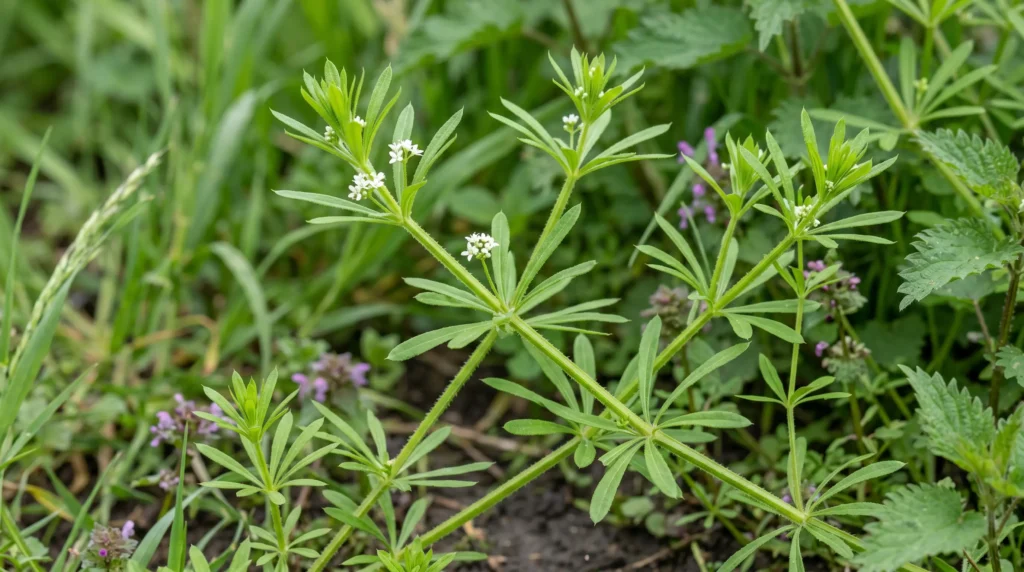
Definition: Galium aparine L. is an annual herbaceous plant with a scrambling, climbing habit, growing up to 150 cm. It has square, slender stems covered in backward-facing hooked hairs, whorled narrow leaves (6–8 per whorl), tiny white four-petalled star flowers (May–August), and round, burr-like seeds.
Key botanical facts:
- Family: Rubiaceae — related to coffee (Coffea arabica) and madder (Rubia tinctorum)
- Habit: annual, climbing and scrambling through other vegetation
- Stems: square cross-section, 30–150 cm, densely covered in hooked trichomes
- Leaves: 6–8 per node in a whorled arrangement, narrow, lance-shaped, rough to the touch
- Flowers: white, star-shaped, 4-petalled, 1–2 mm, appearing May through August
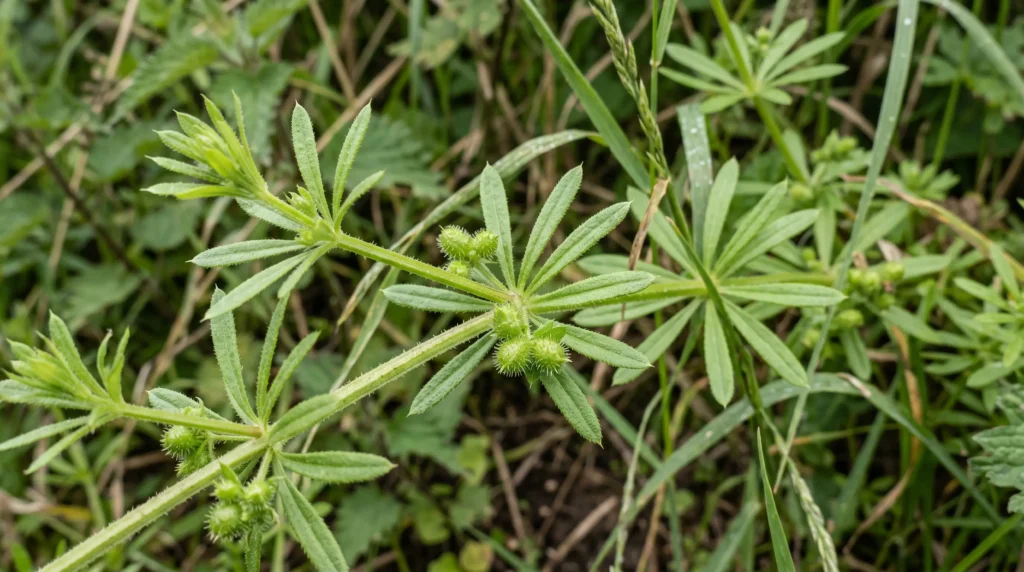
- Seeds: spherical, green burrs 3–5 mm covered in stiff hooked bristles
- UK conservation status: IUCN ‘Least Concern’ — abundant, no conservation restrictions
UK Folk Names — and Why They Matter
Cleavers has more common names than almost any other British hedgerow plant. Each reflects a different aspect of the plant’s character or traditional use:
| Folk Name | Origin / Meaning |
|---|---|
| Sticky willy | Most common UK childhood name; refers to the clinging stems |
| Goosegrass | Geese and chickens love to eat the plant; traditional farm name |
| Bedstraw | Dried stems were historically stuffed into mattresses across Britain |
| Catchweed | Refers to the catching, clinging action of hooked stems |
| Clivers | Old English spelling used in Culpeper’s and Gerard’s herbals |
| Robin-run-the-hedge | Describes the plant’s habit of scrambling through hedgerow shrubs |
The Coffee Connection
Cleavers belongs to the same plant family as coffee. The Rubiaceae connection is more than botanical trivia: the roasted seeds of cleavers can be used as a caffeine-light coffee substitute — a unique and practical UK foraging fact. John Parkinson described this use in his 17th-century herbal Theatrum Botanicum. The seeds are harvested in summer, roasted at 150°C for 15 minutes, and ground to produce a drink with a nutty, roasted flavour and minimal caffeine.
Cleavers in the UK Landscape
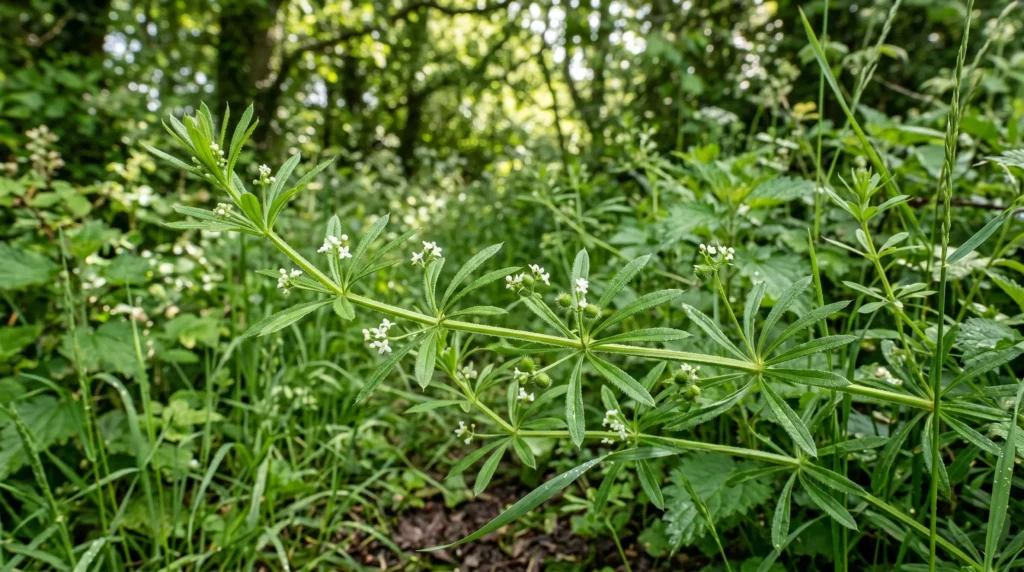
Cleavers is found in virtually every county of England, Wales, Scotland, and Northern Ireland. It is one of the most widespread vascular plants on the British Isles, listed in the Royal Botanic Gardens Kew’s Plants of the World Online database as a common and non-threatened species.
It grows in the classic British hedgerow trio alongside stinging nettles and hawthorn, and is equally at home in urban gardens, riverbanks, and woodland edges. Wherever there is disturbed ground, moisture, and a hedge to climb, cleavers will be found
How to Identify Cleavers in the UK
| Q: What does cleavers look like?
A: Cleavers has square, slender stems densely covered in tiny backward-facing hooked hairs. Its narrow, lance-shaped leaves grow in whorls of 6–8 around each stem node. The whole plant feels rough and sticky — it clings firmly to clothing and fur. It produces tiny white four-petalled flowers from May to August, followed by round green burrs. In early spring (February–March), cleavers forms bright green mats at the base of hedgerows, growing to 150 cm or more by summer. |
Key Identification Features — Visual Checklist
| Feature | What to Look For |
|---|---|
| Stems | Slender, square cross-section; densely covered in tiny backward-facing hooked hairs |
| Leaves | Narrow, lance-shaped; 6–8 per whorl at each node; rough and sticky texture |
| Flowers | Tiny, white, 4-petalled, star-shaped, 1–2 mm; loose clusters May–August |
| Seeds | Round green burrs, 3–5 mm, covered in stiff hooked bristles; late summer |
| Height | 30 cm in early spring; up to 150 cm+ by summer when climbing vegetation |
| Texture | Rough and sticky throughout — will cling firmly to fabric, fur, and other plants |
The Stickiness Test — The Easiest UK Identification Method
Step-by-step identification using the stickiness test:
- Take a fresh stem between your thumb and forefinger.
- Press it gently against the fabric of your sleeve or a woollen jumper.
- If it sticks firmly and is difficult to remove without clinging, it is almost certainly cleavers.
- Confirm by counting the leaves at a single stem node: 6–8 narrow leaves in a whorl = cleavers.
- Throw a stem at a friend’s jumper. If it sticks: congratulations, you have found sticky willy.
The stickiness is caused by microscopic hooked trichomes (hairs) covering every surface of the plant. These hooks evolved to catch animal fur and clothing as a seed-dispersal mechanism. This same characteristic makes cleavers unmistakable — no other common British plant is this sticky.
UK Seasonal Identification Calendar
| Month | What You Will See | Harvest Quality |
|---|---|---|
| February | First low-growing shoots at base of hedgerows; 5–15 cm; look after mild winters | Excellent — tender and potent |
| March | Peak growth; bright green mats 20–50 cm; optimal harvest window for medicinal use | Best — peak medicinal potency |
| April | Still good quality; stems thickening; flowers not yet present | Good — harvest upper thirds |
| May | Flowers appearing; aerial parts becoming fibrous; harvest upper thirds only | Acceptable — use flowers too |
| June–Aug | Flowers fully out; seeds forming; medicinal potency declining; seeds for coffee | Seeds only for harvest |
| Sep–Jan | Plant dies back; root overwinters; no aerial parts available | No harvest — wait for spring |
UK Look-Alike Plants — What NOT to Confuse With Cleavers
| Cleavers Has No Dangerous Look-Alikes in the UK
• All plants that resemble cleavers in British hedgerows are either other medicinal Galium species or unrelated plants with distinctly different flowers and leaves. • Cleavers is not toxic — even in the unlikely event of misidentification, there is no serious risk. • However, always use a current UK field guide for confirmation: Harrap’s Wild Flowers or Collins Flower Guide are recommended. |
| Plant | How to Tell Apart | Risk Level |
|---|---|---|
| Hedge bedstraw (Galium mollugo) | Similar sticky stems but less sticky; white flowers like cleavers; also medicinal | None — benign confusion |
| Lady’s bedstraw (Galium verum) | Yellow flowers (cleavers has white); different leaf texture; easy to distinguish | None — easily identified |
| Silverweed (Potentilla anserina) | Also called ‘goosegrass’; yellow flowers; totally different silver-leafed appearance | None — very different look |
Where to Find Cleavers in the UK
Cleavers grows throughout the British Isles. The following habitats reliably produce quality spring harvests:
- Hedgerows — the classic British habitat; look along any rural lane or footpath in spring
- Riverbanks and ditches — loves moisture and shade; often grows in large dense mats
- Woodland edges and disturbed ground — thrives where light meets shade
- Urban gardens and allotments — extremely common as a ‘weed’ in vegetable patches
- Often grows through stands of stinging nettles — harvest both simultaneously for a spring tonic blend
- Grows throughout England, Wales, Scotland, and Northern Ireland
Cleavers Herb — Active Compounds & Phytochemistry
| Q: What are the active compounds in cleavers herb?
A: Cleavers contains seven main groups of bioactive compounds: iridoid glycosides (asperuloside), flavonoids (quercetin, luteolin, kaempferol), hydroxycinnamic acids (chlorogenic acid), tannins and polyphenols (gallotannins), polysaccharides (9.63% in aqueous extract), triterpenoids (oleanolic acid, ursolic acid), and anthraquinone glycosides (galiosin). Together these compounds explain cleavers’ lymphatic, diuretic, anti-inflammatory, and immunomodulatory actions. |
Primary Bioactive Compounds
| Compound Group | Key Molecules | Concentration |
|---|---|---|
| Iridoid glycosides | Asperuloside, asperulosidic acid, monotropein, aucubin | Significant — primary active group |
| Flavonoids | Quercetin, luteolin, kaempferol, rutin, apigenin, hyperoside, isoquercitrin | Prominent antioxidant group |
| Hydroxycinnamic acids | Chlorogenic acid (1.87%), caffeic acid, ferulic acid | 1.87% in aqueous extract |
| Tannins & polyphenols | Gallotannins, ellagitannins (1.33% as gallic acid) | 1.33% in aqueous extract |
| Polysaccharides | Complex carbohydrates — immunomodulatory fraction | 9.63% in aqueous extract |
| Triterpenoids | Oleanolic acid, ursolic acid, betulin, lupeol | Anti-inflammatory fraction |
| Anthraquinone glycosides | Galiosin and related compounds | Diuretic mechanism |
Plain-English Science: What These Compounds Do in the Body
| Compound | Mechanism | Effect on the Body |
|---|---|---|
| Iridoids (asperuloside) | Modulate cytokine release; stimulate lymphatic flow | Reduces congestion; clears swollen lymph nodes |
| Polysaccharides | Enhance NK cell activity; splenocyte proliferation | Strengthens immune response; supports infection resistance |
| Flavonoids (quercetin) | Scavenge free radicals; inhibit COX/LOX enzymes | Antioxidant protection; reduces chronic inflammation |
| Chlorogenic acid | Antioxidant; supports liver detox pathways | Liver cell protection; metabolic waste clearance |
| Tannins | Astringent action on mucous membranes | Soothes inflamed urinary tract; skin toning effect |
| Anthraquinones (galiosin) | Modulate renal tubule function | Gentle diuretic; supports kidney and bladder flushing |
| Triterpenoids | Inhibit 5-alpha reductase and inflammatory pathways | Anti-inflammatory; investigated for anti-tumour potential |
Research Status — Honest Assessment
| Evidence Strength Summary
• STRONG: Immunomodulatory activity confirmed in Ilina et al. (2020) and Ilina et al. (2019) — two peer-reviewed phytochemical studies. • STRONG: Immuno-enhancing effects in animal models confirmed in Lee et al. (2024), Nutrients. • MODERATE: Diuretic and lymphatic effects well-supported by phytochemical analysis and historical traditional use. • LIMITED: Clinical human trials are currently lacking — all mechanistic evidence comes from in vitro and animal studies. • IMPORTANT: Cleavers should not replace medical care. For personalised advice, consult a NIMH-registered medical herbalist. |
Cleavers Herb Benefits — 8 Evidence-Based Uses
| Q: What is cleavers herb good for?
A: Cleavers herb is primarily used in UK herbal medicine for eight evidence-supported purposes: (1) lymphatic system support and reducing swollen lymph nodes; (2) immune system enhancement; (3) chronic skin conditions including eczema, acne, and psoriasis; (4) urinary tract infections and bladder irritation; (5) spring detoxification and seasonal cleansing; (6) anti-inflammatory and antioxidant protection; (7) liver and digestive support; (8) respiratory and upper respiratory congestion. |
Lymphatic System Support — The Primary Use
Definition: The lymphatic system is a network of vessels and nodes that drains metabolic waste, transports immune cells, and maintains fluid balance throughout the body. When it becomes sluggish — through illness, poor diet, or sedentary lifestyle — symptoms include swollen lymph nodes, skin congestion, fatigue, and recurrent infections.
How cleavers helps: Iridoid glycosides (particularly asperuloside) and polysaccharides in cleavers stimulate lymph flow, reduce stagnation, and support the drainage of congested lymph nodes. This makes cleavers the primary lymphatic herb in Western herbal medicine, used for submandibular, axillary, and inguinal lymphadenopathy.
UK tradition: UK herbalist Christopher Hedley advocated a 90-day protocol of fresh cleavers cold infusion for deep lymphatic cleansing — one of the most widely referenced lymphatic protocols in British herbalism. David Hoffmann’s Medical Herbalism names cleavers as the primary lymphatic herb in Western clinical practice.
- Swollen lymph nodes (neck, armpit, groin)
- Post-illness sluggishness and immune fatigue
- Oedema (fluid retention) in mild, non-pathological presentations
- General lymphatic congestion after winter
“For a personalised cleavers protocol tailored to your health needs, consult a NIMH-registered medical herbalist — the UK’s leading professional body for qualified herbal practitioners.”
Immune System Enhancement
Definition: Beyond its lymphatic effects, cleavers exerts a direct immunomodulatory action — it modulates the immune system rather than simply stimulating it, making it suitable for long-term use.
Key research: Ilina et al. (2020) demonstrated that aqueous extracts of cleavers significantly enhanced splenocyte proliferation and natural killer (NK) cell activity in laboratory studies. Lee et al. (2024, Nutrients) confirmed immune restoration in cyclophosphamide-suppressed animal models. The polysaccharide fraction (9.63% of the aqueous extract) was identified as the primary immunomodulatory constituent.
Spring tonic tradition: used across Britain after winter to restore immune resilience — one of the oldest documented uses in UK folk medicine, recorded in Maud Grieve’s A Modern Herbal (1931).
Skin Health — Eczema, Acne, and Psoriasis
Definition — alterative herb: An alterative is a herb that gradually and gently changes tissue metabolism to clear chronic conditions. Cleavers is the classic alterative for skin in the British herbal tradition.
Mechanism: The lymphatic and alterative action clears the metabolic waste and toxins that burden the skin from within. Simultaneously, flavonoids reduce dermal inflammation and tannins tone and protect skin tissue.
| Skin Condition | Traditional UK Use | Mechanism |
|---|---|---|
| Eczema | 90-day cold infusion protocol; also topical wash | Lymphatic clearing; flavonoid anti-inflammation |
| Acne | Internal cold infusion + topical fresh poultice | Lymphatic drainage; tannin skin toning |
| Psoriasis | Cited by Maud Grieve (A Modern Herbal, 1931) | Alterative action; anti-inflammatory flavonoids |
Urinary Tract Health and UTI Support
Definition: A urinary tract infection (UTI) is a bacterial infection of the bladder or urethra. Cleavers supports the urinary tract through a dual mechanism: diuretic action flushes bacteria from the urinary tract, while demulcent compounds soothe the inflamed lining of the bladder and urethra.
Active mechanism: Anthraquinone glycosides (galiosin) modulate renal tubule function to increase urine output. Tannins provide astringent soothing action on the inflamed urothelium.
UK context: UTIs affect 1 in 2 women in the UK at some point in their lives. Cleavers is recommended as supportive care alongside — not as a replacement for — medical treatment
| IMPORTANT: When to See Your GP
• High temperature (fever above 38°C) alongside UTI symptoms. • Blood in urine (haematuria). • Loin (flank) or back pain — may indicate kidney infection. • Symptoms persisting for more than 3 days despite self-care. • Recurrent UTIs (3 or more per year) — require medical investigation. |
Spring Detox and Seasonal Cleansing
The British spring tonic tradition: Using herbs to ‘spring clean’ the body after a sluggish winter is one of the oldest traditions in UK folk medicine. Cleavers, nettle, and dandelion were the classic Victorian spring tonic trio, used from March to May to restore vitality and clear the congestion accumulated over winter months.
Why cleavers is ideal for spring detox: It simultaneously supports the three primary detoxification organs — lymphatic system, liver, and kidneys — in a single gentle herb. Its cooling and decongestant energetics make it particularly suited to the hot, inflamed, or stagnant states that develop through winter sedentariness.
Best window: March and April in the UK, aligned with the plant’s peak medicinal potency before flowering
“While foraging your spring tonic trio, you may also encounter other valuable native British wildflowers in the same hedgerow habitats — our guide to musk mallow covers another edible and medicinal UK native worth knowing.”
Anti-Inflammatory and Antioxidant Protection
Mechanism: Quercetin and luteolin — two of the most studied anti-inflammatory flavonoids in plant medicine — inhibit the COX and LOX inflammatory enzyme pathways. Chlorogenic acid and polyphenols scavenge reactive oxygen species (free radicals) with significant ORAC (Oxygen Radical Absorbance Capacity) activity
Supporting evidence: Ilina et al. (2019) confirmed in vitro anti-inflammatory and antioxidant activity in ethanolic extracts of Galium aparine.
Conditions where this action is clinically relevant: chronic arthritis, inflammatory bowel conditions, sinusitis, chronic catarrh, and skin inflammation.
Liver and Digestive Support
Definition: Cleavers supports liver function through its hepatoprotective flavonoid fraction, which protects liver cells from oxidative damage and supports bile production. Stimulation of bile flow promotes fat digestion and helps prevent bile duct congestion
.
The mild bitter action of cleavers promotes digestive secretions, improving the efficiency of digestion and helping to relieve sluggish bowel function through bile stimulation rather than laxative action. Culpeper noted that cleavers was recommended for ‘keeping lean’ — likely a historical reference to this digestive and metabolic stimulating effect.
Respiratory and Upper Respiratory Support
Definition: Cleavers supports the upper respiratory tract through its combined lymphatic and anti-inflammatory action, reducing the congestion of lymphoid tissue in the throat, sinuses, and airways.
It is particularly useful for spring colds, sinusitis, chronic catarrh, and swollen tonsillar lymph nodes — all common UK complaints. The traditional British respiratory herbal blend combines cleavers with elderflower and thyme for spring respiratory infections.
Cleavers Herb in UK History and Herbal Tradition
Ancient and Medieval Use
Etymology: The Latin species name aparine derives from the Greek ‘to seize’ — a reference to the plant’s catching, clinging habit. It was known and used in ancient Greece as a remedy against fatigue and as a food.
In medieval Britain, cleavers served remarkable domestic purposes: stems were woven into sieves for straining milk (a practice still documented in parts of Scandinavia), and dried cleavers — known as bedstraw — was stuffed into mattresses across rural Britain to provide fragrant, pest-deterring bedding.
The Great English Herbalists on Cleavers
| Herbalist | Date | Key Statement on Cleavers |
|---|---|---|
| John Gerard | 1597 | Called cleavers ‘a marvellous remedy’; recommended it for snakebite, earache, and skin conditions in The Herball. |
| John Parkinson | 1640 | Noted the seeds as a coffee substitute and described the spring tonic uses in Theatrum Botanicum. |
| Nicholas Culpeper | 1653 | Recommended cleavers for skin eruptions, earache, and ‘keeping lean’; classified it under the rulership of Saturn in The Complete Herbal. |
| Maud Grieve | 1931 | The most comprehensive UK reference on cleavers; detailed uses for psoriasis, skin cancer support, UTI, and lymphatic congestion in A Modern Herbal. |
Victorian Spring Tonic Culture
The Victorian popularisation of spring tonics in Britain turned seasonal herbal cleansing into a cultural ritual. Cleavers juice — extracted by pressing fresh plants — was commonly consumed by British households from March onwards as an annual rite of spring. Street vendors in Victorian towns sold freshly pressed spring herb preparations alongside watercress and elderflower drinks.
This tradition connects to the British naturopathic or ‘nature cure’ movement of the late 19th century, which advocated using abundant seasonal plants as medicines aligned with the body’s natural seasonal rhythms.
British Folk Medicine Traditions
- Legend: Virgin Mary used bedstraw (cleavers) as bedding in the stable — giving the plant its sacred association in British folk culture
- Children’s game: throwing sticky willy at each other’s jumpers — a tradition that continues across UK primary schools
- Scottish tradition: filtering freshly milked cow’s milk through woven cleavers stems — recorded into the 20th century
- Welsh physicians of Myddfai: used cleavers for skin diseases — documented in the 13th-century Welsh medical manuscripts
Modern UK Herbal Practice
- Bartram’s Encyclopaedia of Herbal Medicine (the British clinical reference standard): classifies cleavers as ‘mild herbal remedy with minimal chronic toxicity’
- Christopher Hedley and Non Shaw (A Herbal Book of Making and Taking, 2020): detail the cold infusion protocol now widely used by UK clinical herbalists
- David Hoffmann (Medical Herbalism, 2003): cites cleavers as the primary lymphatic herb in Western herbal practice
- Anne McIntyre (The Complete Herbal Tutor, 2019): recommends cleavers for lymphatic and urinary health
- NIMH (National Institute of Medical Herbalists): cleavers is in routine clinical use among UK-registered herbalists
How to Forage Cleavers in the UK
UK Foraging Law — What You Need to Know
| UK Foraging Law Summary
• Wildlife & Countryside Act 1981: It is legal to pick aerial parts of common plants for personal use. • Do NOT uproot plants — uprooting without landowner permission is illegal. • Cleavers is ‘Least Concern’ conservation status — no species-specific restrictions apply. • Private land: always seek landowner permission before foraging. • Countryside Code: take only what you need; leave the majority for wildlife and natural regrowth. • Avoid: roadside verges (pollution), intensively farmed fields (pesticides), dog-walking areas (contamination). |
UK Regional Foraging Calendar
| Region | First Growth | Peak Season |
|---|---|---|
| South England (Cornwall, Kent, Sussex) | Late January – mid-February | February – March |
| Midlands and East Anglia | February – March | March – April |
| North England (Yorkshire, Cumbria) | March – April | April – early May |
| Scotland (Lowlands) | March – April | April – May |
| Scotland (Highlands) | April – May | May |
| Wales | February – April | March – April |
Step-by-Step UK Foraging Technique
How-to: Foraging Cleavers in the UK Spring (HowTo Schema element)
- Choose a clean location — away from roadsides, intensively farmed fields, and areas used by dog walkers.
- Go on a dry, sunny morning after the dew has evaporated — best for quality and shelf life of your harvest.
- Identify cleavers using the stickiness test and 6–8 whorled leaf pattern (see Section 2).
- Harvest only the top two-thirds of each plant — leave the roots and lower stems intact to allow regrowth.
- Pinch or cut stems cleanly at a node — do not pull plants out (protects the perennial root system).
- Take no more than one-third of any single patch — leave the remainder for wildlife and natural regrowth.
- Transport in a breathable bag or basket — never plastic, which causes sweating and rapid degradation.
- Wash gently at home under cold running water and process immediately, or refrigerate for up to three days.
Ethical Foraging — Looking After British Hedgerows
Why hedgerow ethics matter: British hedgerows are among the country’s most important wildlife habitats, supporting 47 UK Biodiversity Action Plan species. They provide food and shelter for small mammals, birds, insects, and reptiles.
- Never clear an entire patch of cleavers — always leave the majority of any stand
- Cleavers provides ground cover and food for small mammals and birds
- UK foraging resources: Food for Free by Richard Mabey (classic British guide); The Forager’s Harvest by Samuel Thayer
- UK foraging organisations: Association of Foragers, Wild Food School, John Wright’s courses (River Cottage)
How to Prepare and Use Cleavers Herb
Cold Infusion — The Preferred Method (UK Herbalists’ Recommendation)
| Q: How do you make cleavers cold infusion?
A: Fill a clean 1-litre glass jar loosely with fresh cleavers stems and leaves. Cover completely with cold spring or filtered water. Seal the jar and refrigerate overnight (8–12 hours minimum). Strain through a fine sieve or muslin cloth. Drink 1–2 glasses daily throughout spring. The strained infusion keeps refrigerated for 24–48 hours. Dose: 150–300 ml, taken 2–3 times daily. |
Why cold, not hot? Cleavers is a high water-content herb. Boiling water degrades the heat-sensitive constituents, particularly polysaccharides and volatile compounds. Cold infusion extracts the full range of water-soluble active compounds without degradation
.
Taste: Fresh cleavers cold infusion has a surprisingly pleasant, clean, cucumber-like flavour. It is one of the best-tasting spring herb drinks. A sprig of fresh mint can be added for extra freshness.
Hot Infusion (Tea) — For Dried Herb
- Use 1 heaped teaspoon of dried cleavers per cup (250 ml).
- Pour near-boiling water (approximately 90°C — not a full rolling boil) over the herb.
- Cover the cup immediately to prevent loss of volatile compounds through steam.
- Steep for 10–15 minutes.
- Strain and drink. Add honey if desired.
- Dose: 2–3 cups daily.
Note: Dried cleavers tea is significantly less potent than fresh cold infusion. Use double the quantity of dried herb if substituting for fresh.
Fresh Juice — The Most Potent Preparation
Definition: Fresh cleavers juice is the most concentrated medicinal preparation, ideal for acute lymphatic conditions, skin conditions, and UTIs.
- Method 1 (cold-press juicer): Pass large bunches of fresh cleavers through a cold-press juicer.
- Method 2 (blender): Blend with a small amount of water, then strain through muslin or a nut milk bag.
- Dose: 20–30 ml of fresh juice, up to three times daily.
- Shelf life: 24 hours refrigerated only; freeze in ice cube trays for longer storage.
- Taste: fresh and green; mix with apple or cucumber juice for palatability.
Tincture (Alcohol Extract)
Definition: A tincture is a concentrated liquid extract made by macerating the herb in alcohol. Fresh plant tinctures are preferred for cleavers as they preserve the full spectrum of constituents.
| Tincture Type | Ratio | Alcohol Strength | Method |
|---|---|---|---|
| Fresh plant | 1:2 | 40–45% ethanol | Fill jar with fresh chopped herb; cover with alcohol; steep 4–6 weeks in dark |
| Dried herb | 1:5 | 25% ethanol | Standard formulation; use when fresh herb unavailable |
UK note: Food-grade ethanol is available from Craft Distillers UK. Standard 40% vodka is the most accessible alternative and works well for fresh plant tinctures.
Dose: 2–4 ml (fresh plant, 1:2), or 3–5 ml (dried, 1:5), taken three times daily. Shelf life: 2–3 years when stored in a dark bottle.
Apple Cider Vinegar Extraction — Alcohol-Free Alternative
- Fill a glass jar halfway with freshly chopped cleavers stems and leaves.
- Cover completely with raw, unfiltered apple cider vinegar (with the mother).
- Seal tightly and leave in a cool, dark cupboard for 4 weeks.
- Strain through muslin and bottle.
- Use: 1 tablespoon diluted in a glass of water, 1–2 times daily; or add to salad dressings; or add to bathwater for skin conditions.
- Shelf life: 3–6 months.
Topical Applications
- Fresh poultice: Crush fresh stems and leaves and apply directly to skin rashes, minor burns, or localised swellings. Hold in place with muslin or gauze.
- Cleavers wash: Apply cooled strong infusion to affected skin with cotton wool for eczema and acne.
- Bath addition: Pour one litre of cold infusion into a warm bath to support skin conditions or general lymphatic drainage.
- Cleavers ointment: Infuse fresh herb in sunflower or coconut oil; blend with beeswax for a traditional topical preparation.
Culinary Uses — Eating Cleavers
| Use | Season | Method | Notes |
|---|---|---|---|
| Raw in salads | Feb–March | Add young shoots to salad; cucumber-like flavour | Use very young shoots only |
| Steamed or stir-fried | March–April | Reduces stickiness; add to soups or rice dishes | Brief cooking is sufficient |
| Green smoothies | Feb–April | Blend small handful with fruit and water | Popular UK forager method |
| Roasted seed coffee | Summer | Roast seeds at 150°C for 15 mins; grind and brew | Caffeine-light coffee substitute |
Dosage Guide for Cleavers Herb
| Preparation | Standard Adult Dose | Frequency | Notes |
|---|---|---|---|
| Cold infusion (fresh) | 150–300 ml | 2–3× daily | Best form; spring only |
| Hot tea (dried herb) | 250 ml (1 cup) | 2–3× daily | Use 1 heaped tsp; less potent |
| Fresh juice | 20–30 ml | Up to 3× daily | Refrigerate; 24 hr shelf life |
| Tincture (1:2, fresh) | 2–4 ml | 3× daily | Most concentrated form |
| Tincture (1:5, dried) | 3–5 ml | 3× daily | Standard formulation |
| ACV extraction | 1 tablespoon | 1–2× daily | Dilute in water; alcohol-free |
| Dried capsules | 400–600 mg | 2–3× daily | Follow product label |
Course duration: For chronic conditions (lymphatic congestion, skin conditions), UK herbalists recommend a minimum 6–12-week course. For seasonal spring cleansing, a 4–6-week course aligned with March–April is traditional and effective.
Use Clark’s Rule: divide the child’s weight in pounds by 150, then multiply by the adult dose. Alternatively, consult an NIMH paediatric medical herbalist.
Safety, Side Effects and Contraindications
General Safety Profile
| Safety Summary
• Cleavers is considered one of the safest herbs in the Western herbal pharmacopoeia. • Bartram’s Encyclopaedia: ‘Mild herbal remedy with minimal chronic toxicity.’ • No known serious adverse events documented in clinical or traditional use literature. • Appropriate for adults and most children at recommended doses. |
Known Side Effects
| Side Effect | Who Is Affected | Management |
|---|---|---|
| Contact dermatitis (skin irritation) | Sensitive individuals handling fresh plant | Wear gloves when harvesting; wash hands after |
| Mild digestive upset | Rare; usually with very large amounts of fresh herb | Reduce dose; use dried herb instead |
| Allergic reaction | Rare; those with Rubiaceae (coffee family) allergy | Discontinue immediately; seek medical advice if severe |
| Photosensitivity | Very rare; prolonged external use | Avoid direct sunlight immediately after topical use |
Contraindications
| Who Should Avoid or Use Cleavers With Caution
• PREGNANCY: Avoid medicinal doses — insufficient safety data. Culinary amounts may be acceptable but always discuss with your midwife or GP. • BREASTFEEDING: Avoid medicinal use — safety not established. • SEVERE KIDNEY DISEASE: Diuretic herbs can stress compromised kidneys — consult your GP before use. • SEVERE LIVER DISEASE: Use with caution — consult a medical herbalist. • DIABETES: Monitor blood sugar carefully if using cleavers alongside diabetes medication. |
Drug Interactions — UK-Specific
| Medication | Interaction Risk | Advice |
|---|---|---|
| Lithium (Priadel, Camcolit) | HIGH RISK: Diuretics raise lithium serum levels to potentially toxic concentrations | AVOID cleavers entirely if on lithium medication |
| Diuretics (furosemide, thiazides) | Additive diuretic effect; increased dehydration risk | Use with caution; monitor hydration status |
| Warfarin (blood-thinning) | Limited evidence; potential interaction possible | Monitor INR if combining; inform your GP |
| Antihypertensives | Mild diuretic effect may amplify blood pressure lowering | Monitor blood pressure; discuss with GP |
NHS advice: Always inform your GP or community pharmacist of any herbal medicines you are taking, including cleavers, to check for interactions with prescribed medications.
Sourcing Safety — Wild vs Commercial
| Source | Pros | Cons / Risks |
|---|---|---|
| Wild-foraged | Free; fresh; peak potency; no supply chain issues | Pollution risk from roads/farms; requires correct ID; seasonal only |
| Organic dried herb | Reliable; available year-round; certified quality | Less potent than fresh; check harvest date (use within 12 months) |
| THR-registered products | UK MHRA quality assurance; standardised and tested | More expensive; limited product range currently available |
Buying Cleavers Herb in the UK
Available Forms in the UK Market
- Dried loose herb: most widely available; use within 12 months of harvest date
- Herbal tea bags: convenient; variable quality — check herb content per bag
- Liquid tincture: available from specialist UK herbal suppliers and medical herbalists
- Capsules: dried herb in supplement form; good for those who dislike the taste
- Organic certified: available from most quality UK suppliers
UK Suppliers
| Supplier | Location | Products Available | Notes |
|---|---|---|---|
| Baldwins | London | Organic dried herb, tincture | One of the UK’s oldest herbal suppliers |
| Indigo Herbs | Glastonbury | Organic dried herb, full range | Excellent quality; organic certified |
| Neal’s Yard Remedies | Nationwide | Dried herb; select products | Mainstream UK health brand; retail stores UK-wide |
| Buy Wholefoods Online | Online | Bulk dried cleavers | Competitive UK pricing; good for larger quantities |
What to Look for on the Label
- Botanical name confirmed: Galium aparine L. (not just ‘cleavers’ — other Galium species exist)
- Organic certification: Soil Association or equivalent recognised certifying body
- Country of origin: European preferred (UK-grown or Eastern European wildcrafted)
- Harvest date: freshness matters; dried herb has best potency within 12 months of harvest
- THR (Traditional Herbal Registration) mark: the UK MHRA’s quality signal for herbal products
Cleavers Herb — Frequently Asked Questions
| Q: Is cleavers the same as goosegrass?
A: Yes. Goosegrass is one of the most common UK folk names for Galium aparine. Both names refer to exactly the same plant. The name goosegrass comes from geese and chickens’ well-documented fondness for eating the plant. Other common UK names for the same plant include sticky willy, sticky weed, catchweed, bedstraw, clivers, and Robin-run-the-hedge. |
| Q: Can you eat cleavers?
A: Yes, young cleavers shoots (February–March) are edible. The very young leaves can be added raw to salads, briefly cooked in stir-fries, or blended into green smoothies. Cooking reduces the sticky texture. The roasted seeds — harvested in summer — can be used as a caffeine-light coffee substitute. Always start with a small amount to test individual tolerance. |
| Q: What does cleavers herb taste like?
A: Fresh cleavers has a surprisingly pleasant cucumber-like flavour with clean, crisp, green notes. A cold overnight infusion is considered one of the best-tasting spring herb drinks in the British hedgerow pharmacy. Dried cleavers has a more earthy, grassy taste — adding honey improves palatability. |
| Q: Is cleavers herb safe in pregnancy?
A: Medicinal doses of cleavers are not recommended during pregnancy due to insufficient safety data. Culinary amounts — small quantities used as food — are generally considered acceptable, but always discuss any herbal use with your midwife or GP during pregnancy. Cleavers is not recommended during breastfeeding either, as safety has not been established for this context. |
| Q: How long does cleavers take to work?
A: For acute conditions such as a mild UTI or spring cold, some people notice effects within a few days of consistent use. For chronic conditions — eczema, swollen lymph nodes, long-term lymphatic congestion — a consistent course of at least 4–6 weeks is typically recommended by UK medical herbalists. Skin conditions may require 8–12 weeks for full benefit. |
| Q: Can dogs eat cleavers?
A: Dogs often eat cleavers in the wild and it is generally considered non-toxic to dogs. Some UK veterinary herbalists recommend small amounts of diluted cleavers infusion for dogs with skin conditions or sluggish lymphatic systems. However, always consult a qualified veterinary herbalist before giving any herbal preparation to pets. |
| Q: What are cleavers good for?
A: Cleavers are primarily used in UK herbal medicine for: lymphatic support and reducing swollen lymph nodes; urinary tract infections and bladder irritation; chronic skin conditions such as eczema, acne, and psoriasis; spring detoxification and seasonal cleansing after winter; immune system enhancement; and anti-inflammatory and antioxidant protection. It is one of the safest and most widely available medicinal herbs in Britain. |
| Q: Where can I buy cleavers in the UK?
A: Cleavers dried herb and tinctures are available from specialist UK herbal suppliers including Baldwins (London), Indigo Herbs (Glastonbury), Neal’s Yard Remedies (nationwide retail stores), and Buy Wholefoods Online. You can also forage fresh cleavers for free from British hedgerows in spring — it is legal under the Wildlife & Countryside Act 1981 for personal use. See Section 6 of this guide for the full UK foraging protocol. |
Conclusion and Key Takeaways
| Key Takeaways — Cleavers Herb (Galium aparine)
• Cleavers is one of Britain’s most abundant, accessible, and historically significant medicinal plants — free to forage from virtually every UK hedgerow in spring. • Best used fresh: the cold overnight infusion of freshly harvested spring stems is the most potent and best-tasting preparation. • Primary uses: lymphatic support, immune enhancement, skin conditions (eczema, acne, psoriasis), urinary tract health, and spring detoxification. • The science is supportive: immunomodulatory and antioxidant activity confirmed in peer-reviewed studies. Clinical human trials are still limited. • Very safe for most adults. Critical caution: avoid if taking lithium medication. Not recommended in pregnancy. • Forage ethically: follow UK law, the Countryside Code, and leave the majority of any stand for wildlife and natural regrowth. • For personalised advice, consult an NIMH-registered medical herbalist (nimh.org.uk). |
References and Further Reading
Peer-Reviewed Sources
- Ilina T et al. (2020). Immunomodulatory Activity and Phytochemical Profile of Infusions from Cleavers Herb. Molecules, 25(16), 3721. doi:10.3390/molecules25163721
- Ilina T et al. (2019). Phytochemical Profiles and In Vitro Immunomodulatory Activity of Ethanolic Extracts from Galium aparine L. Plants (Basel), 8(12), 541.
- Lee S, Park S, Park H. (2024). Immuno-Enhancing Effects of Galium aparine L. in Cyclophosphamide-Induced Immunosuppressed Animal Models. Nutrients, 16(5), 597.
UK Herbal Reference Texts
- Grieve M. (1931). A Modern Herbal. Tiger Books International.
- Bartram T. (1998). Bartram’s Encyclopaedia of Herbal Medicine. Constable.
- Culpeper N. (1653). The Complete Herbal. (Public domain.)
- Hoffmann D. (2003). Medical Herbalism: The Science and Practice of Herbal Medicine. Healing Arts Press.
- Bone K, Mills S. (2013). Principles and Practice of Phytotherapy (2nd ed.). Churchill Livingstone.
- Hedley C, Shaw N. (2020). A Herbal Book of Making and Taking. Aeon Books.
- McIntyre A. (2019). The Complete Herbal Tutor (Revised ed.). Aeon Books.
UK Organisations and Regulatory Bodies
- National Institute of Medical Herbalists (NIMH): nimh.org.uk
- MHRA Traditional Herbal Registration (THR): gov.uk/guidance/herbal-medicines-THR-scheme
- Royal Botanic Gardens Kew — Plants of the World Online: powo.science.kew.org
- Association of Foragers: associationofforagers.com

Leave a Reply