
You know the feeling. You’ve just pushed through a hedgerow on a March walk somewhere in the English countryside, and now the back of your coat is covered in small, clinging stems, rough to the touch, dressed with tiny round burrs that won’t let go no matter how vigorously you brush. A minor annoyance. Something to pick off and throw aside.
What you’ve just encountered is cleavers plant — known across Britain as Sticky Willy, Goosegrass, Sticky Bobs, and Robin-Run-the-Hedge — and it is considerably more remarkable than your first impression suggests.
Botanically, it is Galium aparine L., a native British annual wildflower belonging to the Rubiaceae family — the same botanical family as coffee. That connection is more than a curiosity: cleavers seeds have been roasted and brewed as a coffee substitute for centuries, used by rural British communities long before imported coffee became affordable.
What most people dismiss as a nuisance weed cleavers plant is actually one of Britain’s most versatile cleavers plant wild plants — a forager’s treasure, an herbalist’s staple, and a gardener’s dilemma.
This guide covers everything you need to know:
- How to identify cleavers in the UK at every growth stage, including safe lookalikes
- Where and when to find and forage it across Britain
- Evidence-backed health benefits and what the science actually says
- Step-by-step preparations: cleavers tea, tinctures, food, and topical uses
- Safety information and who should avoid it
- How to manage cleavers in your garden and allotment
- UK foraging laws, ethics, and seasonal calendar
What Is the Cleavers Plant?
What is the cleavers plant? Cleavers (Galium aparine) is a native British annual wildflower and one of the UK’s most common weeds. It belongs to the Rubiaceae (coffee) family and grows as a scrambling, sticky-stemmed plant throughout hedgerows, gardens, and woodland edges across England, Scotland, Wales, and Northern Ireland. It is edible, traditionally valued as a lymphatic and diuretic herb, and has been used in British herbal medicine for centuries.
Quick Reference: Cleavers plant at a Glance
| Feature | Detail |
|---|---|
| Common UK Names | Cleavers, Sticky Willy, Goosegrass, Sticky Bobs, Robin-Run-the-Hedge, Grip Grass, Catchweed Bedstraw, Cleaverwort |
| Latin Name | Galium aparine L. |
| Plant Family | Rubiaceae (the coffee family) |
| Plant Type | Annual wildflower / weed |
| Native to | UK and Europe |
| Primary Habitats | Hedgerows, woodland edges, gardens, waste ground, field margins |
| Edible? | Yes — stems, leaves, and seeds (when young and properly prepared) |
| Medicinal? | Yes — traditional lymphatic, diuretic, and skin herb |
| Best Season for Leaves (UK) | Late February to May |
| Best Season for Seeds (UK) | July to October |
| Wildlife Value | Food plant for barred straw moth and hummingbird hawk-moth caterpillars |
| Garden Status | Common weed; shallow-rooted and easy to remove |
| Agricultural Status | Significant pest in UK winter wheat and oilseed rape |
How to Identify Cleavers plant in the UK
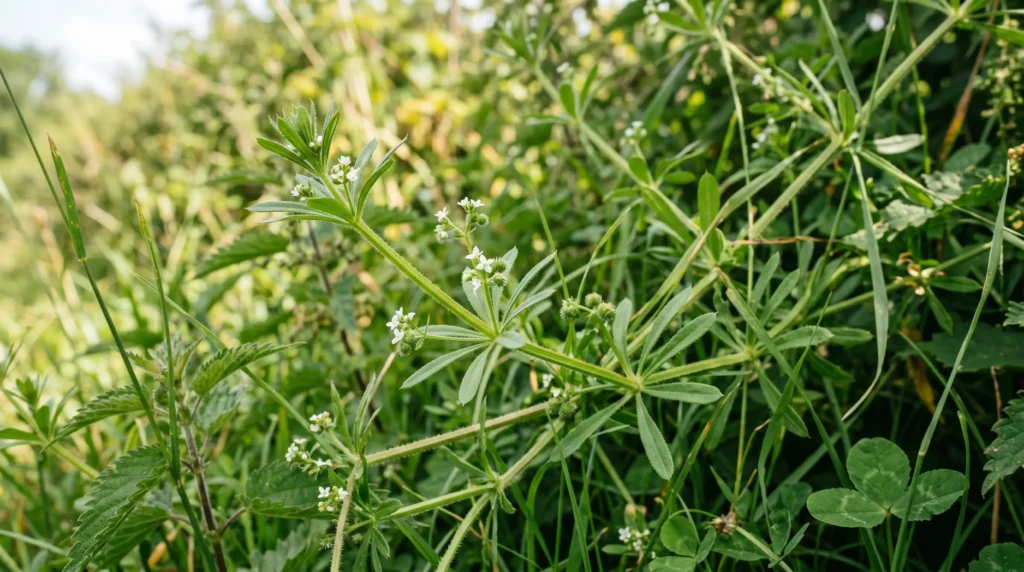
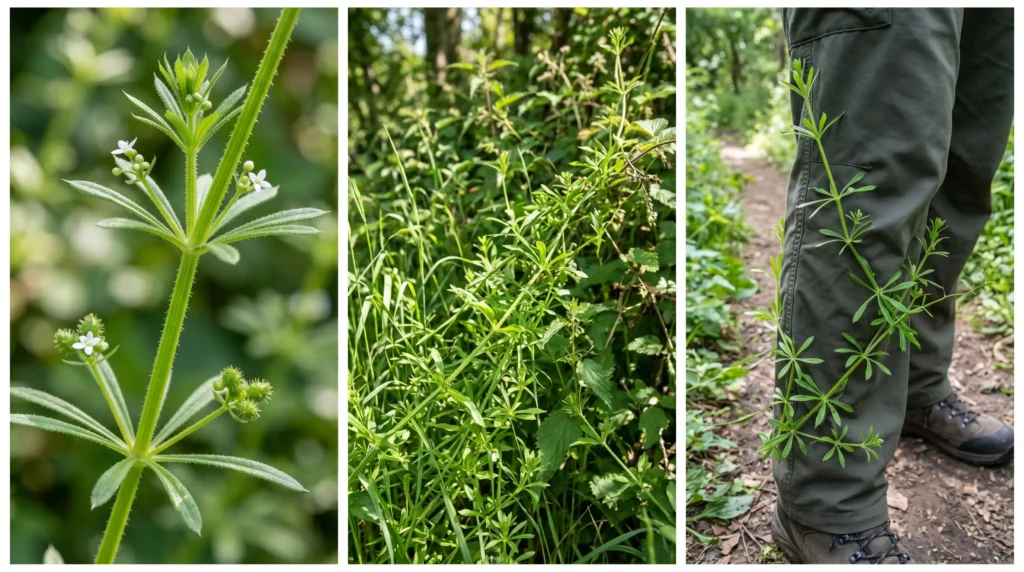
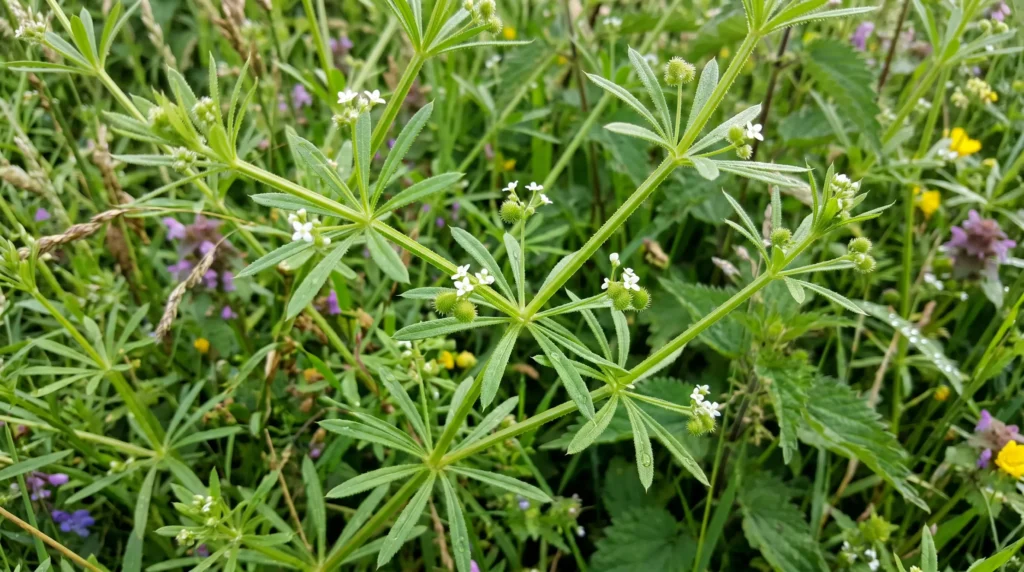
How do you identify cleavers? Cleavers is identified by four key features: square, straggling stems covered in tiny backward-pointing hooked bristles; narrow lance-shaped leaves in whorls of 6–8; small white star-shaped flowers (May–August); and round, hooked seed burrs that cling to clothing and fur. The simplest test is touch — if it sticks firmly to your sleeve when you brush against it, it is almost certainly cleavers.
Key Identification Features Explained
Stems: Cleavers stems are square in cross-section (four-angled), weak and straggling, growing 50–200 cm in length. They are covered in tiny, backward-pointing hooked bristles made of silica — these create the plant’s signature Velcro-like stickiness. This is not a defensive mechanism but a clever climbing adaptation: the hooks allow cleavers to scramble up and over nettles, brambles, and hedging plants rather than supporting its own weight.
Leaves: Narrow, lance-shaped, and rough-textured, the leaves are arranged in distinctive whorls of 6–8 at each node along the stem. Both the leaf surfaces and edges carry the same tiny hooked hairs as the stems.
Flowers: Tiny — just 2 mm across — white, four-petalled, and star-shaped. Flowers appear in small clusters from the leaf axils (the angle between leaf and stem) between May and August. Easy to overlook due to their size, but unmistakable under close inspection.
Seeds/Fruits: Small, round, two-lobed burrs, 2–5 mm across, densely covered in stiff hooked bristles. These cling to animal fur, bird feathers, and clothing to disperse seeds — a strategy called epizoochory.
Growth Habit: Cleavers does not stand upright independently. It scrambles horizontally and climbs vertically, using its hooks to grip surrounding vegetation. A single well-established plant in fertile ground can reach 2 metres in length by summer.
How to Identify Cleavers plant at Every Growth Stage
Understanding cleavers at different stages is important both for safe foraging (harvest at the right time) and garden management (remove before seeds set).
| Growth Stage | What to Look For | UK Timing |
|---|---|---|
| Seedling | Two large, flat, oval, dark-green seed leaves (cotyledons) with a small notch at the tip. Quite different from adult growth — distinctive once you know it. | January–February |
| Young shoots | Small, tender, bright-green whorls of 6–8 leaves on short stems. Soft, slightly sticky. Prime foraging stage. | Late February–April |
| Flowering plant | Longer stems, more pronounced hairs, tiny white star flowers visible. Stems beginning to toughen. Past best for eating. | May–June |
| Seed stage | Dense round burrs forming on stems. Stems become wiry and harsh. Not suitable for consumption. | July–October |
| Die-back | Above-ground plant dies back after seed set. Seeds overwinter in soil. | November–December |
Cleavers plant Lookalikes in the UK — Are Any Dangerous?
Are there dangerous lookalikes for cleavers in the UK? No. All of cleavers’ likely lookalikes in Britain belong to the same genus (Galium) and are equally non-toxic and edible. There are no dangerous plants that could be mistaken for cleavers in the UK. Misidentification among British Galium species carries no safety risk.
| Plant | Key Differences from Cleavers | Edible? |
|---|---|---|
| Lady’s Bedstraw (Galium verum) | Yellow (not white) flowers; smooth stems; not sticky | Yes |
| Sweet Woodruff (Galium odoratum) | White flowers but completely hairless; grows in woodland shade; fragrant | Yes |
| Hedge Bedstraw (Galium mollugo) | Hairless stems and leaves; larger white flowers | Yes |
The definitive identification rule: All British Galium species are non-toxic. If the plant is significantly sticky and has tiny white star-shaped flowers or round burrs, it is cleavers. If it is not sticky, it is a related species — but still safe.
 Where Does Cleaversplant Grow in the UK?
Where does cleavers grow in the UK? Cleavers grows throughout all four nations of the UK — England, Scotland, Wales, and Northern Ireland. It is one of Britain’s most widespread annual wildflowers, thriving in nitrogen-rich, disturbed soils in hedgerows, woodland edges, gardens, allotments, roadsides, canal towpaths, and field margins.
Habitats Where You Will Find Cleavers
Cleavers favours nitrogen-rich, disturbed ground — which explains why it so reliably grows alongside nettles, another reliable indicator of nutrient-rich soil. It thrives in the partial shade and shelter of hedgerow bases, using taller plants as scaffolding.
Most reliable places to look:
- Hedgerows and farm field edges (the most common habitat by far)
- Woodland margins and woodland rides
- Garden borders, especially along fences, walls, and hedges
- Allotments and vegetable patches
- Urban parks, canal towpaths, and railway embankments
- Waste ground and road verges (see safety note in foraging section)
Regional distribution: Cleavers is at home in lowland English farmland, Scottish mixed woodlands, Welsh country lanes, and Northern Irish hedgerows alike. It is largely absent only from the most exposed, wind-scoured upland moorland.
A reliable companion: Look for cleavers scrambling over brambles, nettles, or hedging plants at the base of field boundaries in early spring. If nettles are present, cleavers is usually nearby.
UK Seasonal Calendar — Month-by-Month Guide
| Month | What to Expect | Action |
|---|---|---|
| January–February | Seedlings emerging in mild winters; cotyledons visible | Watch for seedling identification |
| March–April | Young, tender shoots at prime foraging stage | Best time to harvest leaves and stems |
| May–June | Flowering begins; stems rapidly toughening | Harvest early May only; past best by June |
| July–August | Seeds forming on mature, wiry stems | Not suitable for eating |
| September–October | Seeds ripe and dry on the plant | Best time to harvest for cleavers coffee |
| November–December | Plant dies back; seeds overwinter in the soil | Prepare to manage seedlings in spring |
Cleavers plant in British History and Folklore
What is the history of cleavers in Britain? Cleavers has been used in British herbal medicine and rural life for centuries. It was documented by John Gerard in his Herball (1597) and Nicholas Culpeper in the 17th century, used as a spring tonic, wound poultice, botanical dye source, and even a coffee substitute. Its roots in British country life are deep — and almost entirely forgotten.
Etymology — Where Does the Name Come From?
The word “cleavers” derives from the Old English clifrian, meaning “to adhere” or “to stick.” The Latin species name aparine comes from the Greek aparo — “to seize.” Both names reflect the plant’s defining characteristic: its ability to grip and cling to anything it touches.
Its folk names tell the story of how different communities related to it:
- Sticky Willy — the tactile experience of touching it
- Goosegrass — geese and chickens actively seek it out to eat
- Robin-Run-the-Hedge — its scrambling habit through British hedgerows
- Sticky Bobs — the children’s game of throwing burrs at each other’s jumpers, still played on British school fields today
- Kisses — the way the plant clings, likened to a lover’s embrace
Cleavers plant in British Herbal History
Cleavers appears in the foundational texts of British herbalism:
- John Gerard’s Herball (1597): Noted the seeds as a coffee substitute and documented the plant’s use in country medicine.
- Nicholas Culpeper (1652): Recommended cleavers for skin conditions, “stopping of the stomach,” and urinary complaints — in alignment with how herbalists use it today.
- John Parkinson’s Theatrum Botanicum (1640): Further documented its medicinal reputation in British practice.
For ordinary rural British families, cleavers served as a vital spring tonic — the first green food available after the lean winter months, used to restore energy, clear skin, and support the body after months of preserved, salt-heavy food.
Folk Uses Unique to Britain
Several historical uses of cleavers are distinctly British and largely unrecorded by other sources:
- Red botanical dye: The roots of cleavers yield a red dye that was used to colour wool in rural British communities — a practical use entirely separate from its medicinal value.
- Lacemakers’ tool: The seeds were reportedly used by English lacemakers to enlarge the heads of their pins, making them easier to handle.
- Birds’ bones: 17th-century British botanists recorded the curious observation that birds feeding on cleavers roots could have their bones stained red — a direct result of the same dye compounds in the root.
Health Benefits of Cleavers plant — What Does the Evidence Say?
What are the health benefits of cleavers? Cleavers (Galium aparine) is traditionally valued in British herbal medicine as a lymphatic tonic, gentle diuretic, and skin herb. It has been used for centuries to support lymph flow, kidney function, urinary health, and chronic skin conditions. Emerging scientific research supports several of these traditional uses, though large-scale human clinical trials are currently limited.
Important: The evidence base for cleavers is strong in traditional use and growing in preclinical research. However, most studies are in vitro (laboratory cell studies) or animal models. Always consult a NIMH-registered herbalist or your GP before using cleavers for a specific health concern. Find a registered practitioner at nimh.org.uk.
Benefit 1 — Lymphatic System Support
Cleavers is best known in British herbal medicine as a lymphagogue — a herb that promotes healthy lymphatic flow.
The lymphatic system is a network of vessels, nodes, and organs that manages fluid balance, removes cellular waste, and supports immune defence. When lymphatic flow becomes sluggish — as it often does after winter, during illness, or following chronic stress — the body can present with swollen glands, fatigue, skin congestion, and puffiness.
British herbalists trained by the National Institute of Medical Herbalists (NIMH) have historically recommended cleavers as a first-choice spring tonic specifically for this reason. A traditional spring cleanse using cleavers cold infusion is considered one of the simplest ways to support the lymphatic system after winter.
What the science says: An in vitro study by Ilina et al. demonstrated that ethanolic extracts of Galium aparine stimulated immunocompetent blood cells, suggesting genuine immune-modulating potential at a cellular level.
Honest assessment: No large-scale human clinical trials have yet confirmed direct lymphatic effects. The evidence is traditional and preclinical — but it is consistent, spanning centuries and multiple herbal traditions.
Benefit 2 — Diuretic Properties and Urinary Health
Cleavers acts as a mild diuretic — it gently stimulates urine production and supports kidney and bladder function.
In traditional British herbal practice, cleavers has long been used for:
- Cystitis and urinary tract infections (UTIs)
- Water retention and mild oedema
- General kidney and bladder support
Unlike synthetic diuretic medications, cleavers works gently and is not associated with electrolyte depletion in traditional use.
What the science says: A 2025 research review confirmed that Galium aparine has a rich phytochemical composition — including flavonoids, phenolic compounds, and tannins — with demonstrated antioxidant and renoprotective (kidney-protective) properties in laboratory studies.
Benefit 3 — Skin Health
Cleavers is a traditional British remedy for chronic skin conditions, applied both internally (as a tea or tincture) and externally (as a wash or fresh juice).
Conditions historically treated with cleavers in British herbal practice include:
- Eczema and psoriasis
- Seborrhoea (oily, flaky skin)
- Dry, itchy, or inflamed skin
- Minor wounds and burns
The mechanism suggested by herbalists is indirect: by supporting lymphatic drainage and reducing internal congestion, cleavers helps resolve the underlying stagnation that manifests outwardly as chronic skin problems. This approach is described in traditional herbalism as alterative action — gradually restoring proper function rather than suppressing symptoms.
What the science says: A 2016 study published in ScienceDirect demonstrated cytotoxic (cell-killing) activity of Galium aparine extracts against breast cancer cell lines in vitro. This is preliminary and does not constitute evidence for cancer treatment, but it confirms biologically active compounds with meaningful cellular effects.
Immune Support and Anti-inflammatory Action
Cleavers shows immune-modulating effects in recent scientific research, supporting its traditional role as a seasonal immunity herb.
What the science says: A 2024 study by Lee, Park & Park, published in the peer-reviewed journal Nutrients, found that Galium aparine demonstrated significant immuno-enhancing effects in immunosuppressed animal models. The study confirmed upregulation of immune cell activity following administration of cleavers extracts.
In traditional British practice, cleavers is used to support recovery from spring colds, lingering viral illness, and glandular congestion — uses that align with this emerging immune-modulating evidence.
Wound Healing and Antimicrobial Potential
Fresh cleavers has been applied as a wound poultice in British country medicine for centuries, and recent laboratory research supports genuine antimicrobial and wound-healing activity.
What the science says: A 2024 study published in BMC Complementary Medicine and Therapies demonstrated wound-healing effects of Galium aparine at both cellular and molecular level. HPTLC fingerprinting of the extract confirmed the presence of antimicrobial and antioxidant phytochemicals.
Key bioactive compounds identified in cleavers:
- Iridoids: Asperuloside, asperulosidic acid — anti-inflammatory and antimicrobial
- Flavonoids: Quercetin, rutin, kaempferol, luteolin — antioxidant and anti-inflammatory
- Tannins and polyphenols: Astringent and antimicrobial
- Phenolic acids: Chlorogenic acid, caffeic acid — antioxidant
- Vitamin C: Present in meaningful quantities — traditional spring tonic value
- Sterols: Sitosterol, stigmasterol
Benefit 6 — Other Traditionally Recognised Uses
The following uses are documented in British herbal tradition but currently lack clinical trial evidence:
- Blood pressure support: Mild anticoagulant properties noted in traditional UK herbal texts
- Glandular conditions: Historically used for glandular fever, swollen tonsils, and hepatitis
- Liver and spring detox support: Traditional spring cleansing use throughout British herbal history
Summary Evidence Table
| Benefit | Evidence Level | Source |
|---|---|---|
| Lymphatic support | Traditional + in vitro | NIMH; Ilina et al. |
| Diuretic / urinary | Traditional + phytochemical | PMC 2025 |
| Skin health (eczema, psoriasis) | Traditional | British herbalists |
| Immune modulation | Animal models (2024) | Nutrients journal |
| Wound healing / antimicrobial | In vitro (2024) | BMC Comp. Med. & Ther. |
| Anticancer potential | In vitro only (preliminary) | ScienceDirect 2016 |
| Blood pressure / anticoagulant | Traditional only | UK herbal texts |
How to Forage Cleavers in the UK
Is it legal to forage cleavers in the UK? Yes. Under the Countryside and Rights of Way Act 2000, foraging for personal use of above-ground plant parts (leaves, stems, seeds) on public land is generally permitted in England and Wales. You may not uproot any wild plant without the landowner’s permission under the Wildlife and Countryside Act 1981, Section 13. Always seek permission before foraging on private land.
UK Foraging Laws — What You Need to Know
Foraging in Britain sits within a clear legal framework. Understanding it protects both foragers and wild plant populations.
Legal framework summary:
| Law | What It Means for Cleavers Foragers |
|---|---|
| Countryside and Rights of Way Act 2000 | Picking leaves, stems, and seeds for personal use on public land is generally lawful |
| Wildlife and Countryside Act 1981 (Section 13) | You cannot uproot any wild plant without landowner permission — do not pull cleavers up by the roots |
| Private land | Always ask the landowner’s permission before foraging on private fields, farms, or estates |
| Countryside Code | Take only what you need; leave plenty for wildlife and for the plant to regenerate |
Ethical foraging: Take no more than a third of what is present in any one location. Never strip a patch bare. Cleavers is abundant, but responsible foraging protects habitats and sets a positive example.
When to Forage Cleavers plant in the UK
The prime foraging window for cleavers leaves in the UK is late February to late April.
- Late February–April: Young, tender shoots are at peak quality — soft, nutritious, and easy to use. This is when British herbalists recommend gathering cleavers for tonic use.
- May: Stems begin to toughen as the plant flowers. Early May is marginal; late May is generally past the best for leaf harvest.
- After May: Hairs become more pronounced, texture deteriorates, palatability drops significantly.
- July–October: Harvest ripe, dried seed burrs only — for use in cleavers coffee.
Rule of thumb: Harvest leaves before the plant flowers. Harvest seeds when the burrs are brown, dry, and papery.
What and How to Harvest
What to collect:
- Young stems, leaves, and shoot tips — the top 5–10 cm of spring growth
- Do not harvest roots
- Avoid plants that have already flowered or set seed (for eating)
- Avoid plants near busy roads, agricultural spray zones, or polluted water
How to harvest:
- Use clean scissors or pinch cleanly between fingers — no yanking or uprooting
- Collect into a breathable bag — paper or cotton, not plastic (which causes sweating and rapid deterioration)
- A generous double handful is ample for a day’s use
- Wash thoroughly under cold running water before any preparation
Where to find it:
- Base of hedgerows scrambling over brambles and nettles (classic spring habitat)
- Woodland margins in partial shade
- Garden borders and allotment edges (often near nettles)
- Canal towpaths and urban parks
How to Use Cleavers plant — Food, Drinks, and Herbal Preparations
What does cleavers taste like? Young cleavers shoots taste similar to fresh pea shoots — light, green, and slightly grassy, with a mild herbal undertone. The texture is soft when young. Raw leaves feel slightly prickly due to the hooked hairs, which is why infusions and cooked preparations are preferred over eating raw.
Cold Infusion (Recommended by UK Herbalists)
A cold infusion is the method most recommended by NIMH-trained British herbalists for everyday spring tonic use. Cold water extraction is preferred because heat may degrade some of cleavers’ more heat-sensitive active compounds.
How to make a cleavers cold infusion:
- Gather a generous double handful of fresh young cleavers (no roots)
- Wash well under cold running water
- Roughly chop and place into a clean glass jar or jug
- Fill with cold, filtered or tap water
- Seal and leave in a cool spot or fridge for 4–8 hours (overnight works well)
- Strain through a fine sieve or muslin cloth
- Serve with ice and a squeeze of lemon if desired
- Drink 1–2 glasses daily throughout spring
Storage: Keep in the fridge for up to 24 hours. Make fresh daily for best results.
Hot Nourishing Infusion (Spring Tonic Tea)
A hot nourishing infusion is stronger and more medicinal than a quick cup of herbal tea. It is made by steeping a large volume of herb in hot water for an extended period rather than briefly brewing.
How to make a cleavers nourishing infusion:
- Fill a 1-litre glass jar loosely with fresh cleavers — stems, leaves, and any flowers
- Pour over freshly boiled water until the jar is full
- Lid the jar tightly
- Steep for 4–6 hours, or overnight for maximum potency
- Strain and refrigerate
- Drink cool, over ice, within 24–48 hours
When to use it: When you want a more concentrated medicinal preparation during a period of illness, lymphatic congestion, or skin flare-up.
Cleavers Tincture
A tincture is an alcohol extraction of cleavers that concentrates its active compounds and preserves them for long-term use.
How to make a cleavers tincture:
- Fill a clean, sterilised glass jar with fresh young cleavers (packed but not crushed)
- Cover completely with vodka at 40% ABV — ensure all plant material is submerged
- Seal tightly and label with the date
- Macerate in a cool, dark place for 4–6 weeks, shaking gently every few days
- Strain through muslin, pressing firmly to extract all liquid
- Decant into dark glass dropper bottles and label
Typical dose: 2–4 ml in a small glass of water, 2–3 times daily (consult a herbalist for personalised dosing). Shelf life: 2–3 years stored in a cool, dark place.
Cleavers plant Coffee (Seed Preparation)
Cleavers seeds can be roasted and brewed as a genuine coffee substitute — a practice with centuries of history in Britain.
This is botanically legitimate: cleavers belongs to the Rubiaceae family, which includes Coffea arabica (coffee). The seeds contain similar aromatic compounds that develop on roasting.
How to make cleavers coffee:
- Harvest ripe, dry seed burrs in late summer or early autumn (July–October)
- Spread on a baking tray and dry thoroughly in a warm room or low oven (below 50°C)
- Roast in a dry frying pan over low heat, stirring constantly, until darkened and aromatic
- Allow to cool, then grind in a coffee or spice grinder
- Brew as a standard coffee using a cafetière or filter — 1–2 tsp per cup
- The flavour is earthy, slightly nutty, and lower in caffeine than coffee
Cleavers plant in Cooking
Young, washed cleavers can be incorporated into spring cooking:
- Spring soups: Add young shoots to nettle and wild garlic soup — the classic British spring wild food combination. Bristles soften entirely on cooking.
- Wilted greens: Sauté in butter or olive oil like spinach. Texture becomes silky with heat.
- Green smoothies: Blend a small handful of young shoots into spring smoothies — no bristle texture once blended.
- Spring oxymel: Infuse young cleavers with dandelion leaf in apple cider vinegar and honey — a traditional British spring tonic preparation.
External Topical Uses
Cleavers can be applied directly to the skin for irritation, inflammation, and minor wounds.
- Cool tea wash: Make a cold infusion, strain, and apply to irritated or eczema-affected skin with a clean cloth
- Fresh juice: Blend young cleavers and strain through muslin — apply directly to skin for acute inflammation, sunburn, or minor wounds
- Fresh poultice: Crush young stems between fingers and apply directly to minor wounds or insect bites — a traditional British country remedy
Nutritional Profile of Cleavers
What nutrients does cleavers contain? Cleavers contains meaningful amounts of Vitamin C, biologically active iridoids, multiple flavonoids (quercetin, rutin, kaempferol, luteolin), tannins, phenolic acids (chlorogenic and caffeic acid), and plant sterols. No standardised full nutritional panel (calories, macronutrients) exists for cleavers, as it has not been assessed in the same way as mainstream food plants.
Key Bioactive Compounds in Cleavers
| Compound Type | Specific Compounds | Known Actions |
|---|---|---|
| Iridoids | Asperuloside, asperulosidic acid | Anti-inflammatory, antimicrobial |
| Flavonoids | Quercetin, rutin, kaempferol, luteolin | Antioxidant, anti-inflammatory |
| Tannins & polyphenols | Various | Astringent, antimicrobial |
| Phenolic acids | Chlorogenic acid, caffeic acid | Antioxidant |
| Vitamins | Vitamin C (significant) | Antioxidant, immune support |
| Sterols | Sitosterol, stigmasterol | Membrane function |
| Alkaloids | Present in small amounts | Various |
Note on nutritional data: Unlike cultivated vegetables, no comprehensive macronutrient breakdown (calories, protein, carbohydrates, fat) has been established for cleavers. Its nutritional significance lies in its bioactive compounds rather than caloric contribution — it is best understood as a medicinal food rather than a dietary staple.
Safety, Side Effects, and Who Should Avoid Cleavers
Is cleavers safe to use? Cleavers is generally regarded as safe for most healthy adults when used in normal food or herbal tonic quantities. It has a long history of safe use in British herbal medicine with no major documented adverse effects at typical doses. However, specific groups should exercise caution or avoid it entirely.
Who Should Avoid Cleavers or Seek Advice First
| Group | Recommendation | Reason |
|---|---|---|
| Pregnant women | Avoid | May stimulate uterine contractions |
| Breastfeeding women | Consult GP first | Insufficient safety data |
| On anticoagulants (warfarin, aspirin, clopidogrel) | Avoid without medical advice | Cleavers has mild anticoagulant properties — risk of interaction |
| Diabetics on medication | Use with caution; monitor | Mild diuretic effect may alter blood glucose management |
| Kidney or heart conditions | Consult GP or herbalist | Diuretic herbs require caution in these conditions |
| Rubiaceae family allergy | Avoid | Those with coffee or gardenia allergies may cross-react |
| Children | Consult healthcare provider first | Generally considered safe by UK herbalists, but professional guidance is best |
Drug Interactions to Be Aware Of
Cleavers has mild pharmacological activity that may interact with:
- Blood thinners / anticoagulants (warfarin, aspirin, clopidogrel) — the most significant concern; do not use alongside these without medical guidance
- Prescription diuretic medications — additive effect could cause excessive fluid loss
- Diabetes medications — mild diuretic and blood sugar effects may require dose monitoring
Practical Safety Tips for UK Foragers
- Never harvest from busy roadsides — pollution from vehicle exhaust and road spray contaminates plants
- Avoid agricultural field edges where pesticide or herbicide spray drift is possible
- Wash all foraged material thoroughly under running cold water before use
- Use multiple identification features — never rely on one characteristic alone
- “If in doubt, leave it out” — the British forager’s cardinal rule
- Consult a professional — find a NIMH-registered herbalist at nimh.org.uk
Cleavers plant in the Garden — Weed or Wildflower?
Is cleavers a harmful garden weed? Cleavers is a weed in the technical sense — a plant growing where it is not wanted — but it is relatively benign in the garden compared to many weeds. Its roots are shallow and easy to pull. The main concern is seed set: each plant can produce 300–400 seeds, so removal before July is important to prevent rapid population spread.
Pros and Cons of Cleavers in Your Garden
| Pros of Tolerating Cleavers | Cons of Tolerating Cleavers |
|---|---|
| Food plant for barred straw moth and hummingbird hawk-moth caterpillars | Can smother low-growing plants if unchecked |
| Supports hedgerow biodiversity | Sets 300–400 seeds per plant — spreads quickly |
| Edible and medicinally useful — free forage on your doorstep | Stems cling to other plants, causing entanglement |
| First green growth of spring — an ecological marker | Can be a nuisance in vegetable and salad beds |
| RHS recommends tolerating it in wildlife areas | Difficult to control once seeds are set |
How to Control Cleavers plant in Your Garden — Organic Methods
Step-by-step organic cleavers management:
- Hand-weed in early spring (March–April): Cleavers has remarkably shallow roots — the whole plant comes out cleanly with a gentle tug. This is by far the easiest and most effective control method.
- Hoe on dry, sunny days: Slice through the base of the stems just below the soil surface. The severed plant wilts quickly in sun.
- Apply bark mulch in late winter (February): A 5–7 cm layer of bark mulch prevents seedling emergence by blocking light. Apply before cleavers seedlings emerge for best results.
- Remove before seed set (before July): This is the critical timing point. Once seeds form and fall, the next generation is in the soil. Removing the plant in June prevents next year’s problem.
- Avoid deep digging: Turning the soil brings dormant seeds from deeper layers to the surface, creating new germination opportunities.
Cleavers plant as an Agricultural Weed
Cleavers is a serious economic problem in arable farming:
- It can reduce winter wheat yield by up to 64% in heavy infestations — one of the most damaging weed impacts in UK arable farming
- Its clinging stems drag down cereal crops, impeding mechanical harvesting
- Approximately 3% of UK oilseed rape samples are rejected at the mill for cleavers seed contamination
- AHDB (Agriculture and Horticulture Development Board) guidance recommends careful timing of autumn cultivations to disrupt the cleavers lifecycle before drilling
Cleavers plant for Wildlife and Ecology
What wildlife benefits does cleavers provide? Cleavers supports British wildlife as a food plant for the caterpillars of the barred straw moth and the hummingbird hawk-moth, both of which feed specifically on Galium species. Its hooked seed burrs disperse via animal fur and bird feathers (epizoochory), making it an important part of hedgerow seed dispersal ecology. Geese and chickens actively seek it out, which is the origin of the common name “goosegrass.”
Ecological roles of cleavers in British habitats:
- Caterpillar food plant: Barred straw moth (Eulithis pyraliata) and hummingbird hawk-moth (Macroglossum stellatarum) both depend on Galium species, including cleavers, as larval food plants
- Seed dispersal ecology: Hooked burrs evolved specifically to catch on mammal fur and bird feathers — an elegant example of co-evolutionary adaptation
- Spring phenology marker: One of the earliest green plants to emerge in British hedgerows, cleavers serves as a seasonal indicator of spring’s arrival
- Hedgerow biodiversity: Its scrambling habit creates microhabitats within hedges and woodland margins, offering shelter to invertebrates
- Historical pastoral note: Geese and chickens have always gravitated toward cleavers — a fact so well-known that it gave the plant one of its most widely used common names
Buying Cleavers plant in the UK
Where can you buy cleavers in the UK? Dried cleavers herb, tinctures, and capsules are available from UK herbal suppliers including Baldwins of London, Neal’s Yard Remedies, and Napiers the Herbalists in Edinburgh. Look for products labelled Galium aparine, ideally organically certified with UK or European sourcing. However, UK herbalists consistently recommend fresh foraged or home-grown cleavers as superior to dried products, as drying may reduce the potency of heat-sensitive compounds.
Buying Guide — What to Look For
| Product Form | Where to Buy | What to Look For on the Label |
|---|---|---|
| Dried herb | Baldwins, Neal’s Yard, Napiers, online herbal suppliers | Galium aparine, organic certification, UK/EU sourcing |
| Tincture | Independent health shops, herbal practitioners, online | Galium aparine 1:3 or 1:5, alcohol percentage stated |
| Tea bags / blends | Health food shops, online | Galium aparine listed as ingredient, no undisclosed fillers |
| Capsules | Online herbal suppliers | Standardised extract or whole herb powder, clear dosage |
Fresh vs. Dried Cleavers plant — Which Is Better?
| Fresh (Foraged or Home-Grown) | Dried (Purchased) | |
|---|---|---|
| Potency | Higher — all compounds preserved | Lower — heat-sensitive compounds may be degraded |
| Recommended by UK herbalists? | Yes — strongly preferred | Acceptable when fresh is unavailable |
| Availability | Free, seasonal (late February–April) | Year-round |
| Convenience | Requires foraging knowledge | Ready to use |
| Best use | Cold infusions, fresh preparations | Hot teas, tinctures, capsules |
The simplest option for most UK gardeners: Cleavers is very likely already growing in your garden or a nearby hedgerow. The freshest, most potent, and most affordable source is almost certainly within walking distance during spring.
Frequently Asked Questions About Cleavers plant
FAQ: What Is Another Name for the Cleavers Plant in the UK?
Cleavers (Galium aparine) is known by many common names in Britain, including: Sticky Willy, Goosegrass, Sticky Bobs, Robin-Run-the-Hedge, Grip Grass, Catchweed Bedstraw, and Cleaverwort. All of these names refer to the same plant.
FAQ: When Is the Best Time to Forage Cleavers plant in the UK?
The best time to forage cleavers leaves and stems in the UK is late February to late April, when the young shoots are tender, soft, and at peak potency. After May, stems toughen rapidly as the plant approaches flowering. For seeds (to make cleavers coffee), harvest in July to October when the burrs are dry and brown.
FAQ: Is Cleavers plant Safe to Eat Raw?
Young cleavers shoots are technically edible raw, but the tiny hooked hairs make the texture uncomfortable and bristly for most people. Infusions (cold or hot), blended preparations, and cooked dishes are strongly preferred — heat and blending soften or dissolve the hairs entirely.
FAQ: What Does Cleavers plant Taste Like?
Young cleavers shoots taste similar to fresh pea shoots — light, green, and slightly grassy, with a mild herbal undertone. There is no bitterness. When cooked, the flavour is mild enough to blend seamlessly into soups and stir-fries.
FAQ: Can I Use Cleavers If I Am Pregnant?
No. Pregnant women should avoid cleavers. Cleavers is traditionally considered an emmenagogue — a herb that may stimulate uterine contractions. There is insufficient clinical safety data, and out of caution, it should not be used during pregnancy. Consult your midwife or GP with any questions.
FAQ: Does Cleavers plant Really Support the Lymphatic System?
Traditional British herbalism strongly supports this use, and cleavers has been prescribed as a lymphatic tonic by NIMH-registered herbalists for generations. In vitro scientific studies (Ilina et al.) have demonstrated immune-modulating effects at a cellular level. However, large-scale human clinical trials confirming direct lymphatic effects do not yet exist. The evidence is traditional, preclinical, and consistent — but human trial data is still needed.
FAQ: How Do I Make Cleavers plant Tea?
The cold infusion method is recommended by UK herbalists:
- Place a generous handful of fresh young cleavers in a glass jar
- Fill with cold water
- Infuse for 4–8 hours in a cool place or the fridge
- Strain and drink 1–2 glasses daily
For a stronger preparation, see the hot nourishing infusion method in Section 7.
FAQ: Is Cleavers plant the Same as Goosegrass?
Yes. Goosegrass is one of many common British names for Galium aparine. The name “goosegrass” refers to geese’s well-documented fondness for eating the plant. Sticky Willy, Goosegrass, and Cleavers all refer to exactly the same plant.
FAQ: How Do I Get Rid of Cleavers plant in My Garden?
The most effective organic approach:
- Hand-weed in March–April — shallow roots pull out easily
- Hoe on dry days — severed stems wilt quickly in sun
- Apply bark mulch in February — suppresses seedling emergence
- Remove before July — critical to prevent seed set
Avoid deep digging, which brings dormant seeds to the surface and worsens the problem.
FAQ: Can I Give Cleavers plant to My Children?
UK herbalists generally consider cleavers a safe family herb in normal amounts for healthy children. However, always consult a healthcare provider before giving any herbal remedy to children, particularly those with underlying health conditions or taking medication.
Conclusion: Time to See It Differently
The next time you brush past a hedgerow in March and find cleavers stuck stubbornly to your coat sleeve, pause for a moment before picking it off.You are holding one of Britain’s most historically significant wild herbs. A plant that fed rural communities through post-winter lean months, filled the pages of Gerard’s and Culpeper’s herbal texts, coloured wool red, and provided children’s entertainment in school fields for generations.
A plant now confirmed by peer-reviewed science to carry genuine immune-modulating, wound-healing, and antioxidant properties. A plant that is, right now, at its most potent and most useful.
The three things worth remembering:
- Cleavers is a widely overlooked native British herb with one of the longest continuous records of use in UK herbal medicine
- It has genuine traditional and growing scientific support for lymphatic, immune, urinary, and skin health — with honest caveats about the current limits of human trial evidence
- It is free, seasonal, and easy to use — a cold infusion takes five minutes to prepare and costs nothing
Britain’s hedgerows offer this each spring. All that’s needed is the knowledge to take advantage of it.
Have you tried cleavers? Share your favourite preparation method in the comments below.
→ Related reading: [Spring Foraging Guide UK] | [Cleavers Tea Recipe — Step by Step] | [UK Foraging Laws Explained] | [Best Lymphatic Herbs for Spring]
References and External Links:
- National Institute of Medical Herbalists: nimh.org.uk
- Royal Horticultural Society: rhs.org.uk/plants/cleavers
- Wildlife Trusts: wildlifetrusts.org/wildlife-explorer/wildflowers/cleavers
- AHDB Cleavers Agronomy Guidance: ahdb.org.uk
- Lee, Park & Park (2024): Nutrients journal — immuno-enhancing effects of Galium aparine
- BMC Complementary Medicine and Therapies (2024): wound-healing study
- PMC (2025): phytochemical and renoprotective review

Leave a Reply