
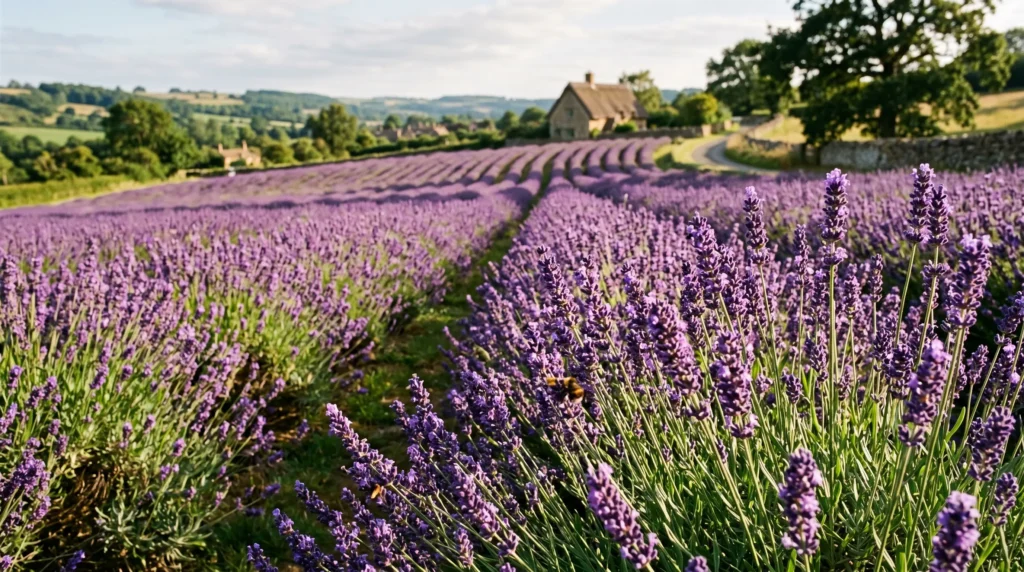
English lavender (Lavandula angustifolia) is a hardy, evergreen, woody perennial shrub renowned for its fragrant purple flower spikes, silvery-grey foliage, and exceptional suitability for UK gardens. On a warm July morning in a British garden, the air hums with bees, the sun draws the scent of linalool from countless slim spikes, and a gentle breeze sends waves across a field of soft purple — this is English lavender in its element.
Despite its name, English lavender is not native to England. Its natural home is the mountain slopes of the western Mediterranean. Yet centuries of cultivation in British herb gardens, combined with a near-perfect match to the temperate UK climate, have earned it the title and made it one of the most beloved garden plants in Britain.
This guide is the most comprehensive English lavender resource written specifically for UK conditions. From botanical identity and British heritage to regional growing advice, pruning, propagation, culinary uses, and the best lavender farms to visit — everything you need is here.
| Quick-Reference Facts | Detail |
|---|---|
| Botanical Name | Lavandula angustifolia Mill. |
| Common Names | English lavender, true lavender, common lavender, narrow-leaved lavender |
| Plant Type | Evergreen, woody perennial shrub |
| Height | 30–90 cm (depending on variety) |
| Hardiness (UK) | Fully hardy throughout the UK; survives to approximately −15°C |
| Bloom Time (UK) | June to August (varies by cultivar and region) |
| Sun | Full sun — minimum 6 hours of direct sunlight daily |
| Soil | Free-draining, poor to average fertility, neutral to alkaline (pH 6.5–8.0) |
| RHS AGM Varieties | Hidcote, Munstead, Imperial Gem, Little Lottie, Hidcote Giant, Melissa Lilac |
What Is English Lavender? Botany & Identity
English lavender (Lavandula angustifolia) is a species of flowering plant in the mint family (Lamiaceae), native to the western Mediterranean mountains but fully naturalised to British horticulture over two millennia. Understanding its botanical identity helps gardeners choose the right plant and avoid the common confusion with French and Dutch lavender.
Botanical Classification
What is English lavender? English lavender is Lavandula angustifolia Mill. — a species in the family Lamiaceae (the mint family). ‘Angustifolia’ means ‘narrow-leaved’ in Latin, describing the plant’s characteristic slim, lance-shaped foliage.
- Family: Lamiaceae (the mint family)
- Full scientific name: Lavandula angustifolia Mill.
- Native range: Western Mediterranean mountains — Spain, France, Italy, North Africa. Not England.
- Why ‘English’ lavender? Centuries of cultivation in English herb, physic, and cottage gardens, and an excellent fit with the British temperate climate, gave it this common name.
- Other common names: true lavender, common lavender, narrow-leaved lavender (all refer to the same plant).
Plant Characteristics
How does English lavender grow? It forms a bushy, mound-shaped, evergreen shrub with narrow silvery-grey leaves and long upright flower spikes from June to August.
- Habit: Bushy, mound-forming evergreen shrub.
- Foliage: Narrow, lance-shaped leaves, silvery to grey-green, up to 6 cm long — the silver comes from tiny hair-like trichomes that reduce water loss.
- Flowers: Small tubular florets in dense cylindrical spikes on long, slender stems. Colour ranges from white through pale pink to soft lavender-blue to deep violet.
- Fragrance chemistry: The distinctive scent is dominated by linalool and linalyl acetate. High concentrations of these compounds are the hallmark of quality English lavender oil — and the reason L. angustifolia is prized over other species for perfumery, culinary, and therapeutic uses.
- Mature size: typically 45–90 cm tall, similar spread (varies by cultivar).
- Lifespan: 10–20 years with correct pruning and drainage. Without annual pruning, plants become woody and decline within 5–8 years.
English Lavender vs. French vs. Dutch (Lavandin) — Key Differences
What is the difference between English lavender, French lavender, and lavandin? The three most commonly sold lavenders in the UK are botanically distinct species with very different hardiness, scent, uses, and garden behaviour. This table clarifies the key differences.
| Feature | English (L. angustifolia) | Lavandin / Dutch (L. × intermedia) | French (L. stoechas) |
|---|---|---|---|
| Hardiness (UK) | Fully hardy throughout UK (to −15°C) | Hardy in most of UK; less so in north | Half-hardy; overwinter under cover |
| Height | 30–90 cm | 60–120 cm | 30–60 cm |
| Flower shape | Compact cylindrical spikes | Longer spikes, sometimes branched | Distinctive ‘rabbit ears’ (petal bracts) |
| Scent | Sweet, floral, clean | Stronger, slightly camphorous | Resinous, quite pungent |
| Culinary use | YES — the only safe culinary lavender | Not recommended | Not recommended |
| Oil yield | Lower yield, higher quality | Higher yield; most commercial oil | Low |
| UK bloom season | June–August | July–September (later) | May–July (earlier) |
| Pollinator appeal | Excellent — most accessible nectar | Very good | Good |
| RHS AGM varieties | Hidcote, Munstead, Imperial Gem, etc. | Grosso, Edelweiss | Few |
Important: Only Lavandula angustifolia (English lavender) is safe for culinary use. French and lavandin varieties contain higher levels of camphor and are not suitable for cooking
English Lavender in British History & Heritage
English lavender has one of the richest histories of any garden plant in Britain, stretching nearly two thousand years from Roman occupation to a modern resurgence of UK lavender farming. This heritage story is almost entirely absent from competitor content — and it matters deeply to UK readers.
Roman Origins & Medieval Use in Britain
Did the Romans bring lavender to Britain? Almost certainly. Lavender was almost certainly introduced to Britain by the Romans following their invasion in 43 AD. It was likely growing in Norfolk herb gardens within a generation of the conquest.
- Medieval monastery gardens: monks cultivated lavender as a medicinal and strewing herb — spread on floors to deter insects and improve air quality in stone buildings.
- Tudor royalty: Queen Elizabeth I reportedly demanded lavender conserve available year-round and consumed it to relieve migraines.
- The Great Plague (1665): bunches of lavender were worn at the wrist to ward off disease. A famous legend describes thieves robbing plague victims while protected by lavender vinegar — the origin of ‘Four Thieves Vinegar’.
The Golden Age: Mitcham, Surrey & the Commercial Lavender Industry
Where was English lavender grown commercially? From the 17th to 19th century, the North Surrey hills — particularly Mitcham, Carshalton, and Wallington — became the world centre of English lavender production for perfumery, linen scenting, and pharmaceuticals.
- London lavender sellers with their distinctive cry (‘Who’ll buy my sweet lavender?’) were a fixture of Victorian street life.
- First World War disruption: lavender oil was used to dress wounds when antiseptic supplies ran short. The public was urged to bring lavender from their gardens to dressing stations.
- Post-WWI rapid decline: urban development swallowed the Surrey lavender fields. By the 1980s, commercial English lavender production had almost ceased.
Norfolk Lavender — Keeping the Flame Alive
When was Norfolk Lavender founded? Norfolk Lavender was established in 1932, when Linn Chilvers and Francis Dusgate planted 13,000 lavender plants on six acres at Heacham, Norfolk — and for decades it was the sole keeper of the English commercial lavender tradition.
- 1936: First distillation stills acquired, producing high-quality English lavender oil.
- Today: nearly 100 acres; England’s largest lavender farm.
- Holds the National Collection of lavenders — more than 100 varieties.
- Welcomes approximately 150,000 visitors annually; includes a shop, distillery, restaurant, and plant centre.
The Modern Resurgence of British Lavender
British lavender farming has undergone a dramatic revival since the early 2000s, driven by consumer demand for British-grown, natural products, agricultural diversification, and the powerful effect of lavender fields as photogenic visitor destinations.
- Castle Farm (Kent, established 1892): one of the UK’s oldest commercial lavender farms, now welcoming visitors during harvest.
- Cotswold Lavender (Worcestershire): stunning hilltop Cotswolds location; distillery; 40+ varieties.
- Mayfield Lavender (Surrey): classic field setting; hugely popular for photography.
- Downderry Nursery (Kent): the UK’s premier lavender specialist; holds the second National Collection with 250+ varieties.
Best English Lavender Varieties for UK Gardens
Which English lavender varieties are best for UK gardens? The best English lavender varieties for UK gardens are those holding the RHS Award of Garden Merit (AGM), which confirms reliable performance in British conditions. The most widely grown are Hidcote and Munstead, but the right choice depends on your purpose, garden size, and soil type.
RHS Award of Garden Merit (AGM) — What It Means
What does RHS AGM mean for lavender? The RHS AGM (Award of Garden Merit) is awarded to plants that have been independently trialled and proven to be reliably excellent in UK garden conditions. It is the clearest quality signal available to UK gardeners — and not all lavenders sold in UK garden centres hold it.
AGM English lavender varieties include: Hidcote, Munstead, Hidcote Giant, Imperial Gem, Little Lottie, Melissa Lilac, and several others. Look for the AGM symbol on the label.
The Classic Two: Hidcote vs. Munstead — Detailed Comparison
| Hidcote | Munstead | |
|---|---|---|
| RHS AGM | Yes (1932 & reconfirmed 2002) | Yes |
| Height | ~45–50 cm | ~45–60 cm |
| Spread | ~60 cm | ~60–75 cm |
| Flower colour | Deep violet-purple | Soft lavender-blue |
| Bloom time (UK) | Late June–August | Mid June–August (c.2 weeks earlier) |
| Fragrance | Strong, classic lavender | Sweeter, slightly softer — preferred for cooking |
| Best for | Hedging, formal borders, cutting, drying | Hedging, cooking, containers, wildlife planting |
| Habit | Compact, tight mound; can splay if unpruned | Mounded, slightly looser; very neat habit |
| Pollinator appeal | Excellent | Excellent |
| Lifespan (free-draining soil) | 15–20 years | 15–20 years |
| Named after | Hidcote Manor, Gloucestershire | Munstead Wood, Surrey (Gertrude Jekyll’s garden) |
Other Top English Lavender Varieties for UK Gardens
| Variety | Height | Colour | Best Use | Key Notes |
|---|---|---|---|---|
| Hidcote Giant | ~75 cm | Purple-blue | Back of border, cut flowers | RHS AGM; larger than Hidcote |
| Imperial Gem | ~45 cm | Rich purple | Low hedging, formal edges | RHS AGM; very compact & neat |
| Little Lottie | ~30 cm | Pale pink | Containers, front of border | RHS AGM; dwarf; excellent in pots |
| Melissa Lilac | ~45 cm | Soft lilac | Borders, cutting | RHS AGM; fine fragrance |
| Vera | ~60 cm | Dark lavender-blue | Cottage garden, oil | Old variety; strong essential oil |
| Bowles Early | ~45 cm | Lavender-blue | Early season interest | Flowers earlier than most |
| Nana Alba | ~20–30 cm | Pure white | Rock gardens, alpine beds, edging | Dwarf; compact and charming |
| Rosea | ~45 cm | Pale pink | Mixed hedges, cottage borders | Unusual colour; pairs well with Hidcote |
Choosing by Purpose — Quick-Reference Guide
- Best for hedging: Hidcote or Munstead (plant 30 cm apart for a solid hedge).
- Best for containers/pots: Little Lottie, Munstead, or Imperial Gem (compact, mounded habit — ideal for growing lavender in containers)
- Best for cooking/culinary use: Munstead (sweetest scent), Hidcote (stronger flavour).
- Best for cutting and drying: Hidcote, Hidcote Giant, Vera.
- Best for wildlife and pollinators: Hidcote, Munstead, Imperial Gem — all hold RHS Plants for Pollinators designation.
- Best for white flowers: Nana Alba.
- Best for pink flowers: Little Lottie, Rosea.
- Best for small or alpine gardens: Nana Alba, Little Lottie.
How to Grow English Lavender in the UK — Complete Guide
How do you grow English lavender in the UK? Successful UK lavender growing depends on three non-negotiable conditions: full sun (minimum six hours daily), excellent drainage, and annual pruning. Almost all lavender losses in UK gardens trace back to failure in one of these three areas.
Site Selection — Where to Plant English Lavender
Where does English lavender grow best in the UK? English lavender grows best in an open, south-facing position in full sun, with good air circulation and perfectly drained soil. It thrives in the same conditions that frustrate most other plants — dry, exposed, and nutrient-poor.
- Full sun: minimum 6 hours of direct sun daily — non-negotiable for good flowering.
- Avoid: shady spots, frost pockets, north-facing slopes, and low-lying areas prone to standing water.
- Good air circulation reduces fungal disease risk — important in the UK’s wetter climate.
- Coastal gardens: English lavender handles coastal wind and salt spray very well.
- South-facing walls and banks: ideal microclimates — warm, sheltered, and fast-draining.
Soil Requirements — The Critical Factor for UK Gardens
What soil does English lavender need? English lavender needs light, free-draining, low-fertility soil with a neutral to slightly alkaline pH (6.5–8.0). The single biggest cause of lavender death in UK gardens is waterlogged soil causing root rot.
- Ideal soil: light, sandy, or chalky — free-draining, poor to average fertility.
- pH: neutral to slightly alkaline (6.5–8.0); tolerates mildly acidic but dislikes very acidic soils.
- The number one killer: waterlogged soil in winter causes Phytophthora root rot — by far the most common cause of lavender loss in the UK.
Improving clay soil — UK’s most common gardening challenge:
- Mix in horticultural grit (at least 30% by volume) when planting.
- Raise the planting area: mound the soil or build a raised bed.
- Add perlite to the planting hole for extra aeration.
- Apply a 2–3 cm layer of gravel or grit mulch around the base: reflects heat, aids drainage, deters weeds.
Important: Never add compost, manure, or peat to lavender planting holes. These increase moisture retention and promote lush, floppy, flower-poor growth.
When to Plant English Lavender in the UK
| Month | Planting Advice |
|---|---|
| March–May | BEST time. Warm soil, long establishment period before winter. Ideal for container-grown plants from nurseries. |
| June–July | Good, but avoid planting in waterlogged ground after summer rain. Water in dry spells during the first season. |
| August–September | Still viable — allow at least 6 weeks before the first frost. Ensure drainage is excellent going into autumn. |
| October–February | AVOID. Cold, wet soil causes root rot in fresh plantings. Buy now, pot on, plant in spring. |
This is also the best time to plan your borders — see our guide to bedding plants for companion colour ideas.
How to Plant English Lavender — Step by Step
- Prepare the site: remove weeds, improve drainage if needed, loosen soil to 30 cm depth.
- Dig a hole twice the width of the rootball, the same depth.
- Add a handful of horticultural grit to the planting hole.
- Position the plant so the top of the rootball sits just above soil level — this prevents crown rotting.
- Backfill with original soil mixed with grit. Do NOT add compost or fertiliser.
- Firm gently and water in well.
- Apply a 2–3 cm layer of gravel or grit mulch around the plant — do not let it touch the stem.
- For hedging: plant 30 cm apart for a dense hedge; 40–45 cm for informal rows.
Watering English Lavender
How often should you water English lavender? Established English lavender rarely needs watering — it is one of the most drought-tolerant garden plants. Overwatering is far more dangerous than drought.
- New plants (Year 1): water in dry spells but allow soil to dry between waterings — never keep the soil constantly moist.
- Established plants (Year 2+): water only during prolonged drought. Once roots are established, English lavender thrives on neglect.
- Container plants: water when the top 2–3 cm of compost is dry; ensure the pot has drainage holes; allow to dry out almost completely in winter.
Golden Rule: When in doubt, do NOT water. Overwatering kills far more English lavender than drought does.
Feeding English Lavender
Does English lavender need feeding? No. English lavender actively prefers poor soil. Nitrogen-rich feeds produce lush, floppy growth with fewer flowers.
- Do NOT feed with general-purpose, nitrogen-rich fertilisers — ever.
- Optional: a light dressing of potassium (potash) in spring encourages flower production.
- Container plants only: a single application of a low-nitrogen, high-potassium liquid feed in late spring.
- No manure, no compost, no peat — for any lavender, at any time.
Regional UK Growing Guide
| UK Region | Key Growing Considerations |
|---|---|
| South England (London, SE, SW) | Most favourable region; widest variety choice; lavandins can also be grown successfully. |
| Midlands | Generally fine; prioritise south-facing aspects; ensure excellent winter drainage. |
| North England (Yorkshire, Lancashire) | Stick to proven hardy varieties: Hidcote and Munstead; protected south-facing sites are ideal. |
| Scotland & Northern Uplands | Possible with Hidcote and Munstead on free-draining, south-facing slopes; avoid frost hollows. |
| Wales (coastal areas) | Coastal sites suit lavender very well; inland upland sites need shelter and excellent drainage. |
| East Anglia | Excellent conditions: lower rainfall, chalky soils, long dry summers — ideal lavender country (see Norfolk Lavender). |
Pruning English Lavender — The Complete UK Guide
How do you prune English lavender? Prune English lavender once a year in late August or early September, cutting back by up to two-thirds into the green (leafy) growth — never into old, bare, brown wood. A spring tidy-up in March or April removes winter-damaged tips. Annual pruning is not optional: it is the single most important action for keeping lavender compact, floriferous, and long-lived.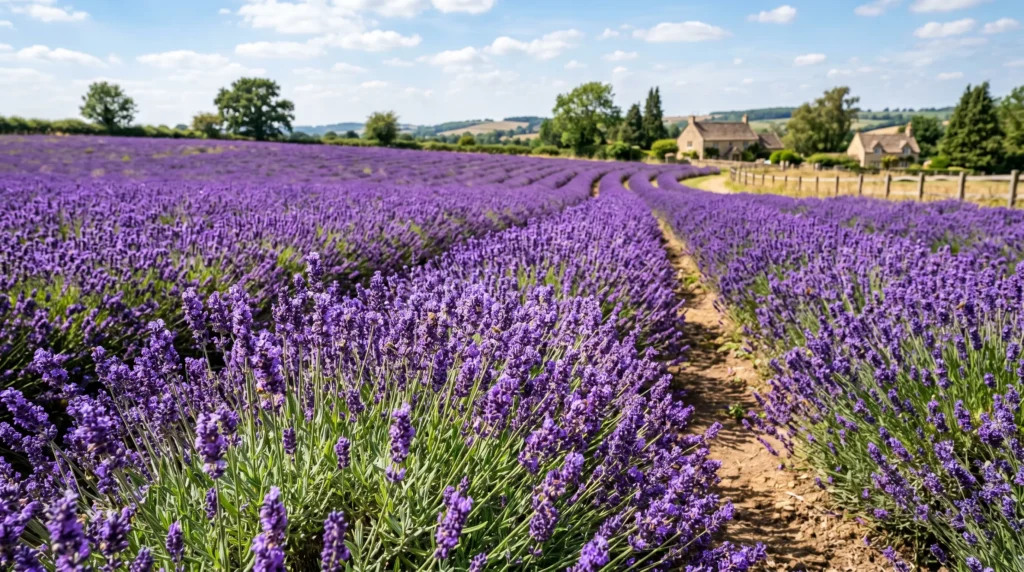
Why Pruning Is Non-Negotiable
- Unpruned lavender becomes woody and open at the base, loses vigour, and flowers progressively less each year.
- Lavender cannot regenerate from old, bare, brown wood — cutting into it kills the branch. This is the most common fatal mistake UK gardeners make.
- Annual pruning keeps plants compact, extends their lifespan from ~5 years to 15–20 years, and maintains the tidy mound shape that makes lavender so attractive.
The Two-Prune System for UK Gardens
| Prune | When (UK) | How Much to Cut | Purpose |
|---|---|---|---|
| Spring tidy-up | March–April (once new growth is visible) | Remove only winter-damaged tips; trim to just above new green growth | Removes frost damage; stimulates spring growth; maintains shape |
| Main annual prune | August–September (after flowering) | Cut back by up to two-thirds into green, leafy growth — NEVER into bare brown wood | Prevents woodiness; maintains compact mound; extends lifespan to 15–20 years |
How to Identify the Correct Cut Point
- Look for the boundary between the silvery-green leafy growth above and the grey-brown, bare, woody stems below.
- Your cut should land in the green, leafy zone — at least 5 cm above where the leaves stop.
- Aim for a rounded, hedgehog-shaped mound as the final shape.
- Use sharp, clean secateurs — sterilise between plants if any disease is visible.
Visual Guide: The cut point is where the leaves start, not where you stop seeing wood. If there are leaves, you can cut there.
Can You Rescue a Woody, Neglected Lavender?
How do you save a woody lavender? If the plant still has green shoots emerging from the woody base, cut back hard to those shoots in August. If the entire base is bare brown wood with no green growth at all, the plant cannot be saved — replace it.
- Only attempt rescue pruning in August — not in spring, when cutting into stressed plants is more risky.
- Prevention is always better than rescue: one prune per year prevents this entirely.
Propagating English Lavender
How do you propagate English lavender? The most reliable and widely used method is semi-hardwood cuttings taken in late summer (August–September). This produces plants identical to the parent and avoids the variability of seed-grown lavender.
From Cuttings — The Recommended Method
Best time for lavender cuttings in the UK: late August to September, using semi-hardwood (partially matured) shoot tips.
- Select a healthy, non-flowering shoot tip approximately 8–10 cm long.
- Strip leaves cleanly from the lower half of the stem.
- Optional: dip the cut end in hormone rooting powder.
- Insert into a 50:50 mix of perlite and horticultural grit — not compost, which is too rich and retains too much moisture.
- Place in a cold frame or unheated greenhouse. Keep barely moist.
- Roots form over 4–8 weeks. Leave undisturbed until clearly rooted (check for resistance when tugged gently).
- Pot on into individual pots in early spring; plant out the following May.
Tip: Softwood cuttings (May–June) root faster but wilt more easily. Semi-hardwood cuttings (August–September) are slower but more resilient — the recommended approach for beginners.
From Seed — Slower and Less Reliable
Can you grow English lavender from seed? Yes, but named cultivars such as Hidcote and Munstead do not come true from seed — plants will vary. Seed-growing is best suited to the species form (Lavandula angustifolia) rather than named varieties.
- Sow in spring in a cold frame.
- Seeds require light to germinate — do not bury them; press onto the surface.
- Germination is slow: allow 3–6 weeks at minimum.
Layering — Easiest for Beginners
Layering requires no equipment and is almost foolproof for beginners.
- In spring or early summer, select a long, flexible stem growing low on the plant.
- Bend it gently to the ground without breaking it.
- Nick the bark at the point where it will touch the soil — about 30 cm from the tip.
- Pin the nicked section to the soil with a hairpin or small stone, and cover with a little soil.
- Roots will form over summer. Sever from the parent plant in autumn; pot on or transplant.
Month-by-Month UK Lavender Care Calendar
What should I do with English lavender each month? Use this month-by-month calendar as your annual reference for lavender care tasks, timed specifically for UK conditions and climate.
| Month | What to Do with Your English Lavender |
|---|---|
| January | No action needed. Avoid walking on frozen or waterlogged soil around plants. |
| February | Monitor for wind rock. Check container plants — ensure drainage holes are not blocked by ice or debris. |
| March | Spring tidy: remove dead tips once new growth is visible. Check soil drainage. Good time to buy new plants from nurseries. |
| April | Continue spring pruning if not done. Begin watering new plants if dry. Optional: light potash feed for containers. |
| May | BEST planting month for UK. Prepare sites. Plant container-grown lavenders into warm, settled soil. |
| June | Early varieties (Munstead) begin flowering. Enjoy the show! Apply gravel mulch now if not already done. |
| July | Peak flowering season. Harvest for drying when approximately 50% of buds are open. Deadhead spent flowers if not harvesting. |
| August | MAIN PRUNING MONTH. Cut back into green growth after flowering. Take semi-hardwood cuttings for propagation. |
| September | Finish pruning by early September at the latest — late cuts leave plants vulnerable to winter damage. |
| October | Bring container lavenders under cover in colder UK regions. Do not plant in cold or wet ground. |
| November | Ensure drainage around plants is excellent — this is the most critical factor for winter survival. |
| December | Appreciate the silvery-grey evergreen foliage. Plan spring plantings. Order plants from specialist nurseries early for the best choice. |
Companion Planting & Garden Design with English Lavender
What grows well with English lavender? English lavender is one of the most versatile companion plants in UK gardens — it deters pests, attracts beneficial insects, and thrives in the same challenging conditions (dry, sunny, poor soil) that many other plants dislike.
Why English Lavender Is a Garden Team Player
- Deters pests: the strong aromatic scent repels aphids, whitefly, and is widely reported to discourage slugs, mice, and flies.
- Attracts beneficial insects: bees, butterflies, hoverflies — supporting pollination for neighbouring plants.
- Fills the ‘bake zone’: thrives in the same dry, sunny, exposed spots where lavender often thrives alongside other Mediterranean plants.
Best Companion Plants for English Lavender in UK Gardens
| Companion Plant | Why It Works |
|---|---|
| Rosemary | Same Mediterranean origins and growing conditions; complementary grey-green colour palette; both attract bees. |
| Catmint (Nepeta) | Tumbles attractively at lavender’s feet; same sunny, dry preference; long pollinator season extends after lavender fades. |
| Old English / Heritage Roses | Classic cottage garden pairing; lavender reportedly deters aphids from rose stems. |
| Alliums | Striking purple globes flower just before lavender, extending the purple colour season from spring into summer. |
| Thyme & Sage | Same drainage needs; ideal aromatic herb garden combination; all thrive in poor, sunny conditions. |
| Salvias | Late-season companion; extends the purple, bee-friendly border from August into October. |
| Cistus (Rock Rose) | Same sun and drainage requirements; creates an authentic Mediterranean planting scheme. |
| Ornamental Grasses (Stipa tenuissima) | Adds movement and texture; fine, flowing contrast to lavender’s solid silvery mounds. |
| Verbena bonariensis | Tall, airy, purple-flowered; extends the colour palette vertically above the lavender. |
Using Lavender in Specific UK Garden Styles
- Cottage garden: mix with roses, Red Clematis, alliums, and catmint; allow some self-seeding for a relaxed, informal feel.
- Formal/contemporary garden: clipped Hidcote hedges as edging for paths or kitchen garden beds.
- Sensory garden: excellent for visually impaired users — strong scent, textural foliage, the sound of buzzing bees.
- Wildlife garden: massed Munstead or Hidcote is a pollinator magnet; leave seed heads for finches in winter.
- Container garden/patio: Little Lottie or Imperial Gem in terracotta pots with gritty compost.
- Coastal garden: highly tolerant of salt spray and wind — pairs beautifully with sea holly (Eryngium) and thrift (Armeria).
Troubleshooting — Why Is My Lavender Dying?
Why is my English lavender dying? The most common cause of lavender failure in UK gardens is root rot caused by waterlogged soil — this alone accounts for the majority of lavender losses. Other common problems include woody die-back from lack of pruning and too-fertile soil producing leafy but flowerless plants.
| Problem / Symptom | Likely Cause | UK-Specific Fix |
|---|---|---|
| Grey, wilting, dying stems despite watering | Root rot (Phytophthora) from waterlogged soil | Dig up, inspect roots (brown/mushy = rot). Improve drainage immediately or replant in a raised bed. Do not replant lavender in the same spot. |
| Woody, bare at the base; few flowers | Not pruned annually | If green shoots are visible, cut hard into green growth in August. If no green growth remains — replace the plant. |
| Leggy, floppy growth; lots of foliage, very few flowers | Soil too rich or nitrogen fertiliser applied | Stop all feeding. Poor soil produces more flowers. Do not add compost or manure. |
| Leaves turning yellow | Overwatering or waterlogging | Reduce watering; check drainage. Allow soil to dry thoroughly between waterings. |
| Frosted stem tips in spring | Late frost damage (common in northern UK) | Remove damaged tips only once new green growth is clearly visible. Do not cut back healthy growth early. |
| No flowers at all | Shade, plant too young, or wrong pruning time | Ensure 6+ hours full sun. Plants may flower poorly in Year 1. Did you prune at the wrong time, removing developing flower buds? |
| White/grey powdery coating on leaves | Powdery mildew (uncommon in UK) | Improve air circulation. Remove affected material. Avoid wetting foliage when watering. |
| Sudden complete death of plant | Shab (Phoma lavandulae) — fungal disease | Remove and destroy affected plants immediately. Do not replant lavender in the same soil. Most common in heavy, wet clay. |
Uses of English Lavender — Culinary, Craft, Wellness & More
What is English lavender used for? English lavender (Lavandula angustifolia) is used in cooking, aromatherapy, traditional British craft, dried flower arrangements, and natural pest deterrence. It is the only lavender species that is safe for culinary use.
Harvesting English Lavender
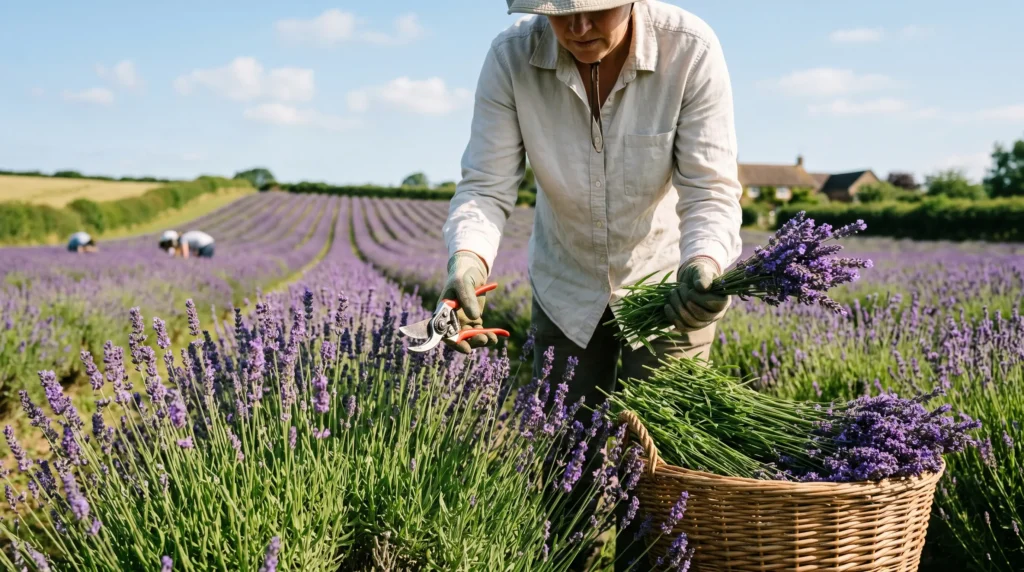
When to harvest English lavender in the UK: harvest when approximately half the buds on each spike have opened — this is when essential oil content is at its highest.
- Cut in the morning, after the dew has dried but before the midday heat begins to release too much volatile oil.
- UK harvest season: typically July, with peak harvest in mid-July for most varieties.
- Cut stems long, leaving some green growth below the cut — this doubles as your post-flowering prune.
Drying & Preserving English Lavender
- Bundle 20–30 stems loosely — stems need air circulation to dry properly.
- Hang upside down in a warm, dry, dark, well-ventilated space — a shed, airing cupboard, or dark garage works well.
- Dry for 2–4 weeks until the buds feel papery and completely dry.
- Store in airtight containers away from direct light. The fragrance lasts 1–3 years.
Culinary Uses — UK Focus
Important: Only use Lavandula angustifolia (English lavender) for cooking. French (L. stoechas) and lavandin (L. × intermedia) are NOT culinary safe. Use sparingly — a little lavender goes a very long way. Too much gives food an unpleasant soapy taste.
Traditional UK culinary uses for English lavender:
- Lavender shortbread — a classic Scottish and English tradition.
- Lavender honey — infuse dried buds in warm honey; bottle when cool.
- Lavender sugar — blend dried buds with caster sugar; use in baking and cocktails.
- Lavender lemonade — steep buds in simple syrup; mix with lemon juice.
- Lavender scones — add sparingly to the dry ingredients before combining.
- Herbes de Provence blend — lavender with thyme, rosemary, and summer savory.
Best cultivars for cooking: Munstead (sweetest, most gentle flavour), Hidcote (stronger, more robust), and Havana.
Traditional British Crafts
- Lavender sachets: dried buds in muslin bags — the classic British use for scenting drawers, wardrobes, and pillows; a traditional wedding and christening gift.
- Lavender wands: a traditional English craft, woven from fresh stems bent over a core of dried buds.
- Pot pourri: dried buds, leaves, and stems; combine with dried roses and orris root as a fixative.
- Dried flower bundles: long-stemmed Hidcote or Hidcote Giant bound with ribbon.
Wellness & Aromatherapy — Evidence-Based Guidance
Is English lavender good for sleep and anxiety? Evidence suggests English lavender aromatherapy may have modest, measurable benefits for sleep quality and mild anxiety — but results in clinical literature are mixed, and most research involves concentrated essential oil rather than garden plants.
- Linalool and linalyl acetate (the primary aromatic compounds) are the focus of most lavender wellness research.
- Sleep: some peer-reviewed studies suggest lavender aromatherapy may modestly improve sleep quality in healthy adults. Results are inconsistent across studies.
- Anxiety: evidence suggests mild calming effects from aromatherapy. Results are most consistent for short-term, situational anxiety — not as a treatment for anxiety disorders.
- Skin: lavender oil has established antimicrobial and mild anti-inflammatory properties; widely used in cosmetics and topical preparations.
Important: English lavender essential oil is toxic to cats and dogs if ingested in significant quantities (ASPCA data). Garden planting and diluted external use carry very low risk, but keep concentrated oil away from pets. Consult your vet if in doubt.
English Lavender Farms to Visit in the UK
Where are the best lavender farms to visit in the UK? The UK now has dozens of visitor lavender farms, from Norfolk to Kent to the Cotswolds and Surrey. The best time to visit nationally is the second half of July — but always check the farm’s social media first, as bloom timing varies by up to two weeks each year.
| Farm | Location | Highlights | Best Visit Time |
|---|---|---|---|
| Norfolk Lavender | Heacham, Norfolk | England’s oldest & largest lavender farm (100 acres); National Collection of 100+ varieties; distillery; farm shop; café; plant centre | June–August |
| Castle Farm | Shoreham, Kent | Commercial lavender & hop farm; lavender products; working farm with regular harvest events; shop and café | July |
| Cotswold Lavender | Broadway Hill, Worcestershire | 40+ varieties on a stunning hilltop Cotswolds site; distillery open during harvest; panoramic views | Late June–July |
| Mayfield Lavender | Banstead, Surrey | Classic Surrey lavender field; iconic red phone box; hugely popular for photography; entry fee applies | June–September |
| Downderry Nursery | Hadlow, Kent | UK’s premier lavender specialist; 250+ varieties; second National Collection; specialist plants available to buy | May–August |
| Lordington Lavender | Lordington, West Sussex | Family-run; beautiful South Downs setting; lavender products; picnic-friendly | July |
| Jersey Lavender | St Brelade, Jersey | Island setting; second National Collection; farm tours; distillery; lavender products | June–August |
Visit Planning Tip: Always check exact bloom dates before travelling — lavender season varies year to year with UK spring temperatures. Follow farms on social media for real-time field condition updates. Best visiting time nationally: the second half of July.
English Lavender for Wildlife & Pollinators
Is English lavender good for bees? Yes — English lavender (Lavandula angustifolia) is an RHS Plants for Pollinators plant and one of the best-documented bee-attracting plants in UK gardens. Its open flower structure makes nectar more accessible to bees than French or Dutch lavender types.
- Research from the University of Sussex found bumblebees demonstrate a preference for lavender when given a choice of plants.
- Attracts: honeybees, bumblebees, solitary bees, butterflies (especially gatekeepers and small whites), hoverflies, and evening moths.
- Seeds left on the plant provide food for finches and sparrows through winter.
- Lavender hedges act as wildlife corridors, providing shelter and nesting material for small insects.
- For maximum pollinator benefit, plant in large drifts of 10 or more plants — mass planting multiplies the value far beyond single specimens.
- Leave some flowerheads unpruned through winter to provide overwintering shelter for beneficial insects.
Frequently Asked Questions — English Lavender
The questions and answers below are structured to directly address the most searched People Also Ask queries on Google for English lavender in the UK. Each answer is self-contained and optimised for search engine featured snippets.
Is English lavender hardy in the UK?
Yes. Lavandula angustifolia is the hardiest of all lavender species, tolerating temperatures down to approximately −15°C. Named varieties such as Hidcote and Munstead are reliably fully hardy throughout the UK, from Cornwall to the Scottish Highlands. Plants in containers are slightly more vulnerable since their roots have less insulation, so move large pots to a sheltered spot during severe winters.
When does English lavender flower in the UK?
English lavender typically flowers in the UK from June through August, with the national peak in mid to late July. Munstead is one of the earliest varieties, beginning to flower around mid-June. Hidcote follows approximately two weeks later. Lavandins (the Dutch hybrid group) flower later, often extending into September. Exact timing varies each year depending on spring warmth.
How far apart should I plant English lavender?
For a solid lavender hedge, plant 30 cm apart. For an informal row of individual mounds that touch when in full flower, space 40–45 cm apart. In a mixed border, allow 60 cm for larger varieties like Hidcote Giant. Container plants do well in pots at least 30 cm in diameter with one plant per pot.
What is the difference between English lavender and French lavender?
English lavender (Lavandula angustifolia) is fully hardy throughout the UK, has a sweeter scent, is the only culinary-safe species, and produces simple cylindrical flower spikes. French lavender (Lavandula stoechas) has distinctive ‘rabbit-ear’ petal bracts, is only half-hardy in the UK and needs winter protection, flowers earlier (May–July), and has a more resinous, pungent scent. French lavender is not suitable for cooking.
Why is my English lavender dying?
The most common cause is root rot from waterlogged soil — this accounts for the vast majority of lavender losses in UK gardens. Signs include grey, wilting stems and mushy brown roots. Other causes include lack of annual pruning (leading to woody die-back) and shade. If leaves are silvery-grey but the plant stands upright, this is perfectly normal — it is the natural foliage colour.
Can English lavender grow in clay soil?
Only with significant modification. Lavender cannot tolerate waterlogged roots. In clay soil: dig in large quantities of horticultural grit (30% by volume), raise the planting area into a mound, or grow in raised beds. Alternatively, grow in pots with a gritty, free-draining compost. Munstead is generally considered slightly more tolerant of wetter soils than Hidcote.
How do I prune English lavender?
Prune once a year in late August or September, immediately after flowering. Cut back by up to two-thirds, always cutting into the green, leafy growth — never into old, brown, bare woody stems, as lavender cannot regenerate from bare wood. Aim to leave a neat, rounded mound shape. In March or April, remove any winter-damaged tips. Always use sharp, clean secateurs.
Is English lavender safe for cats and dogs?
The ASPCA lists English lavender as potentially toxic to cats and dogs if ingested in significant quantities, primarily due to its linalool content. The risk from casual garden contact is very low, but pets that eat substantial amounts of foliage or concentrated essential oil may experience mild gastrointestinal upset. Do not apply lavender essential oil directly to pets. Contact your vet if you suspect ingestion of large amounts.
Can I grow English lavender in a pot?
Yes, very successfully. Choose a compact variety such as Little Lottie, Munstead, or Imperial Gem. Use a pot at least 30 cm in diameter with drainage holes. Fill with a mix of loam-based compost and 20–30% horticultural grit. Water when the top 2–3 cm of compost is dry; let the pot dry out almost completely in winter. Move to shelter during severe frost. Repot every 2–3 years.
How long does English lavender live
With proper care — particularly annual pruning and excellent drainage — English lavender can live 15–20 years or more. Without annual pruning, plants typically become woody and decline within 5–8 years. In heavy clay soil or shaded positions, lifespan is significantly reduced. Starting with high-quality UK-grown plants in the right conditions is the best investment for longevity.
Is English lavender native to England?
No. Despite its common name, Lavandula angustifolia is native to the mountains of the western Mediterranean — including Spain, France, and Italy. It was likely introduced to Britain by the Romans around 43 AD and has been cultivated in English gardens for nearly two thousand years, which is how it acquired the ‘English’ name. It thrives in the UK’s temperate climate, making it one of the most successfully naturalised introduced plants in British horticulture.
Can you eat English lavender?
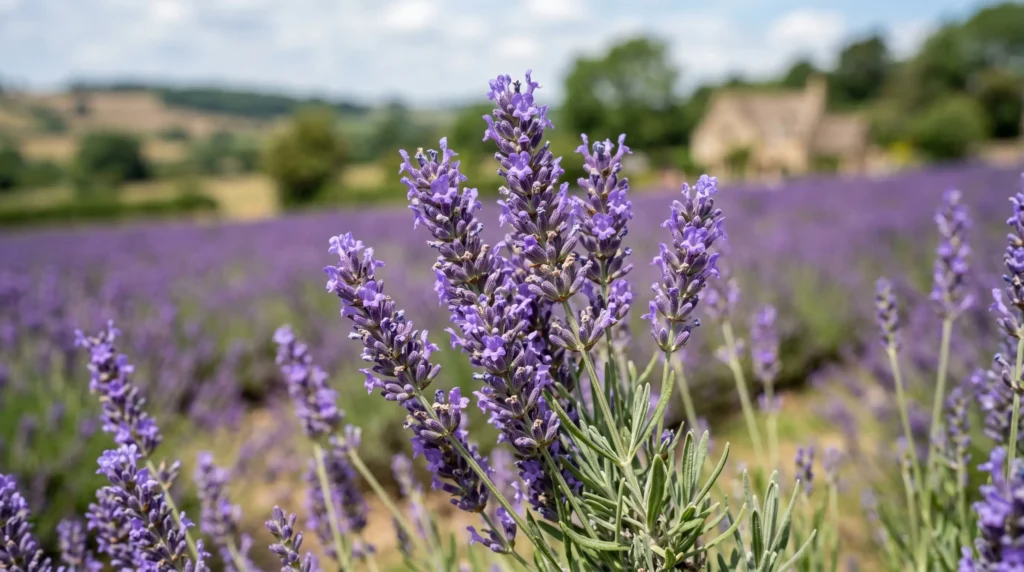
Yes — Lavandula angustifolia (English lavender) is the only culinary-safe lavender species. Use dried flower buds very sparingly: a quarter of a teaspoon of dried buds is typically sufficient for a batch of shortbread. Too much produces a soapy, perfumed taste. French (L. stoechas) and lavandin (L. × intermedia) are not suitable for cooking. The best cultivars for flavour are Munstead (sweetest) and Hidcote.
What is the best lavender for bees in the UK?
English lavender (Lavandula angustifolia) varieties are the most bee-friendly lavenders available because their open flower structure makes nectar and pollen more accessible than French or Dutch types. Hidcote and Munstead are the most widely recommended for pollinator planting, and both hold the RHS Plants for Pollinators designation. For maximum impact, plant lavender in large drifts of at least 10 plants.
Where can I buy English lavender plants in the UK?
English lavender plants are widely available from RHS Plant Centres, reputable local nurseries, and specialist online nurseries such as Ashridge Nurseries, Hedges Direct, and Downderry Nursery. Look for plants with RHS AGM status for guaranteed quality. Buy from UK-grown suppliers where possible — plants already climatised to British conditions establish more reliably. Spring (April–May) offers the widest selection in garden centres.
When should I visit lavender farms in the UK?
The peak lavender flowering season in the UK is generally from late June to late July, with mid-July being the most spectacular week at most farms. However, exact timing varies year to year depending on spring weather. Norfolk Lavender (Heacham, Norfolk) and Mayfield Lavender (Surrey) are among the most visited. Always check the farm’s social media or website before travelling — farmers post real-time field condition updates during the season.

Leave a Reply