
| AT A GLANCE | Maize (Zea mays) is the UK’s fastest-growing arable crop, now covering 200,000+ hectares in England and Wales.
Over 70% of UK maize goes to animal feed; the rest supplies bioenergy, food, and industrial uses. This guide covers: botany, UK history, full agronomy, food & nutrition, animal feed, industrial uses, market data, and sustainability policy. Written for: UK farmers, agronomists, students, food writers, land managers, and the general public. |
Why Maize Matters to UK Readers Today
Maize (Zea mays) has quietly become one of the most important crops in British agriculture — yet most people outside farming barely know it exists in the UK at all. The numbers are striking: in 1973, just 20,000 acres of maize were grown in the UK. By 2016 that figure had risen to over 450,000 acres, and production has continued to expand since. Behind that growth story lie dramatic shifts in UK livestock farming, rural energy policy, food culture, and climate.
In the UK, the plant is called maize. In the United States, Canada and much of the informal English-speaking world, it is called corn. Sweetcorn — the yellow cobs sold in supermarkets — is simply one form of the same species. Whether you encounter it as silage in a dairy ration, as a crisp morning bowl of cornflakes, as fuel in an anaerobic digester, or as biodegradable packaging, maize is already deeply woven into everyday British life.
This guide is designed to be the most comprehensive, UK-specific resource on maize available online. It covers everything: botanical classification, the remarkable history of how maize arrived in Britain, how to grow it successfully in our climate, its nutritional profile, its role in livestock feeding, its industrial and bioenergy applications, the latest UK market data for 2025/26, and the sustainability challenges and policy frameworks that shape its future.
By the end, you will understand not just what maize is, but why it matters — and what decisions about growing, buying, or eating it look like in a specifically British context.
What Is Maize? Botany & Classification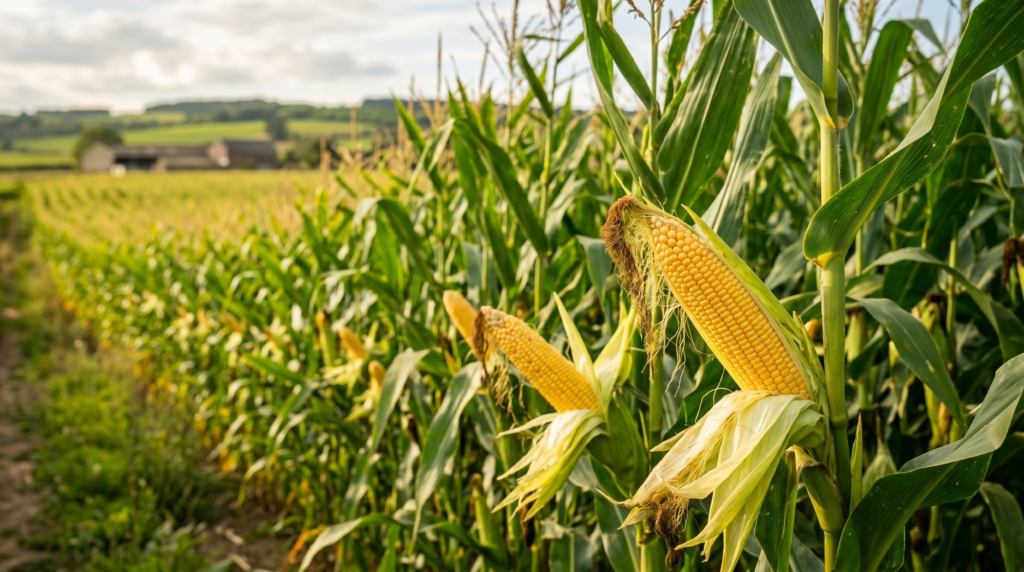
Maize is a tall annual grass in the family Poaceae, cultivated worldwide as a cereal grain, forage crop, vegetable, and industrial raw material. Understanding its botany provides the foundation for every practical decision a UK grower or food producer makes about it.
Scientific Classification
| Taxonomic Rank | Classification |
|---|---|
| Kingdom | Plantae |
| Family | Poaceae (grasses) |
| Tribe | Andropogoneae |
| Genus | Zea |
| Species | Zea mays L. |
| UK-Relevant Subspecies | Zea mays subsp. mays (all cultivated forms) |
Common names used in the UK include maize (crop/plant in agricultural and scientific contexts), sweetcorn or corn-on-the-cob (the vegetable form), and, in older literature, Indian corn. The term ‘corn’ without qualification is generally avoided in UK scientific and agronomy circles, where it historically referred to the locally dominant cereal grain (wheat in England, oats in Scotland).
Plant Anatomy — Key Structures
Understanding maize anatomy is essential for growers: pollination is entirely wind-dependent, which directly affects planting layout decisions in the UK.
| Structure | Function | UK Grower Relevance |
|---|---|---|
| Tassel | Male flower at apex of plant; releases pollen | Wind pollination — plant in blocks, not rows, for UK field crops |
| Silk | Female stigma emerging from ear; catches pollen | Silk emergence is the critical pollination window — avoid stress |
| Ear / Cob | Reproductive structure bearing kernels | Ear DM% at harvest determines silage quality — target 50%+ of total DM |
| Husk | Leafy covering protecting ear | Tight husks reduce disease and pest ingress |
| Kernels | Seeds; composed of pericarp, endosperm, germ | Endosperm = starch; germ = oil. Composition drives feed and industrial value |
| Stalk / Stem | Structural support; stores sugars | Lodging risk in UK autumn storms — select stiff-strawed varieties |
| Root system | Brace roots + seminal roots | Brace roots emerge above ground — do not disturb; critical for standability |
Types and Varieties Relevant to the UK — Comparison Table
What are the main types of maize grown in the UK? The following five types cover virtually all UK commercial production and are defined by kernel composition, moisture content, and end use.
| Type | UK Common Name | Primary UK Use | Key Trait |
|---|---|---|---|
| Zea mays saccharata | Sweetcorn | Human food | High sugar (sucrose) content in kernel; eaten fresh, tinned, or frozen |
| Forage / silage maize | Silage maize | Livestock feed (dairy, beef) | High bulk dry matter; whole plant ensiled |
| Grain maize | Grain maize | Animal feed / industrial / bioethanol | High starch; crop left to dry before combine harvest |
| Waxy maize | Waxy maize | Industrial starch (adhesives, paper) | Unique amylopectin profile; specialist niche |
| Flint maize | Flint corn | Specialist / heritage / artisan food | Hard, glass-like endosperm; bred for cooler climates |
In the UK, forage/silage maize accounts for by far the largest share of production, followed by grain maize on warmer southern sites. Sweetcorn is grown on a much smaller scale, primarily for fresh market and pick-your-own (PYO) operations.
The History of Maize — From Mesoamerica to the UK
Origins and Domestication
Maize originated in Mesoamerica approximately 10,000 years ago, making it one of the oldest cultivated crops on Earth. Its wild ancestor is teosinte (Balsas teosinte, Zea mays subsp. parviglumis), a scrubby grass native to the Balsas River Valley in what is now western Mexico. To the untrained eye, teosinte barely resembles modern maize — it produces small, hard seed heads of just a dozen kernels rather than the large, multi-rowed cobs we recognise today.
The transformation from teosinte to Zea mays is considered one of the most remarkable examples of plant domestication in human history. Indigenous peoples — including the ancestors of the Maya, Aztec, and Inca civilisations — selectively bred teosinte over thousands of generations, progressively selecting for larger cobs, more rows of kernels, and higher yield. Maize became sacred to many Mesoamerican cultures; the Maya creation myth holds that humans were made from maize dough.
Global Spread After 1492
Christopher Columbus encountered maize in Cuba in 1492 and returned samples to Europe. Spanish and Portuguese explorers rapidly spread the crop across continents: to West Africa (where it helped drive population growth and, tragically, also fuelled the slave trade economy), to Asia via the Indian Ocean trade routes, and throughout Europe from the Atlantic coast to the Balkans and Ottoman Empire.
By the mid-16th century, maize was being grown from Portugal to Turkey. It became a dietary staple in Central and Southern Europe — polenta in northern Italy, mamaliga in Romania, and boiled maize in the Balkans. In sub-Saharan Africa, it displaced sorghum and millet to become the continent’s most important crop. In North America, it was already the foundation of indigenous agriculture and became the bedrock of European colonial and eventually industrial agriculture.
Maize in the United Kingdom: A Surprisingly Recent Story
Despite widespread European adoption, maize remained largely irrelevant to British agriculture for four centuries after Columbus. Britain’s cool, cloudy climate and short growing season were genuine barriers to the varieties available. While continental European farmers grew maize, British farmers grew wheat, barley, oats, and, later, sugar beet.
The transformation began in the 1970s and accelerated rapidly. Three key drivers propelled UK maize from a curiosity to a mainstream crop:
- Improved short-season varieties: Plant breeders developed varieties with lower FAO maturity ratings capable of reaching harvestable dry matter within the shorter UK growing season.
- Dairy sector expansion and intensification: As UK dairy farms grew larger and sought higher-energy forages, maize silage offered a superior metabolisable energy (ME) content compared with grass silage.
- Climate warming: Rising average temperatures extended the effective UK growing season, expanding the geographical range within which maize can reliably be grown.
- Bioenergy demand: The growth of anaerobic digestion (AD) plants from the mid-2000s created a new market for maize as an energy crop feedstock.
| Year | Approx. UK Maize Area | Key Development |
|---|---|---|
| 1973 | ~20,000 acres (8,000 ha) | Commercial maize establishment begins |
| 1990 | ~100,000 acres (40,000 ha) | Dairy sector adoption accelerates |
| 2005 | ~250,000 acres (100,000 ha) | AD sector creates new demand; climate shifts |
| 2016 | ~450,000 acres (182,000 ha) | Peak recent area; UK’s third-largest arable crop |
| 2020+ | 250,000+ ha (England & Wales) | Consolidation; sustainability pressures; policy shifts |
Today, maize is grown primarily in England and Wales, with very limited production in Scotland where the growing season is too short for most varieties. It is the UK’s most important forage crop and a growing contributor to rural energy supply.
Growing Maize in the UK — Complete Agronomic Guide
Growing maize successfully in the UK requires attention to climate, soil, variety, timing, nutrition, and post-harvest management. This section is designed as a self-contained reference for UK farmers and agronomists, covering every stage of production from site selection to harvest.
Site Selection and Climate Requirements
What climate does maize need to grow in the UK? Maize is a warm-season crop with specific temperature requirements that make site selection critical in the UK’s cool, maritime climate.
- Soil temperature: Maize requires a minimum soil temperature of 8–10°C at seed depth to germinate. Below this, seeds sit dormant and risk rotting. Never drill into cold, wet soils.
- Frost sensitivity: Maize is frost-sensitive at all growth stages. Late spring frosts (May) can devastate young crops; early autumn frosts (October) can damage grain crops before harvest.
- UK suitability zone: Most of England and Wales below 400 feet (120 m) altitude is suitable. South-facing slopes in sheltered positions are ideal. The further north and west, the more critical variety choice becomes.
- Soil type: Free-draining soils with good moisture retention are optimal. Avoid heavy clays prone to waterlogging. Minimum pH 5.0 (target pH 6.5+). Poor tolerance of highly acidic conditions.
- Altitude and aspect: Higher altitudes and north-facing slopes lose growing degree days rapidly. For every 100 ft of additional altitude, the growing season effectively shortens by approximately one week.
Seedbed Preparation
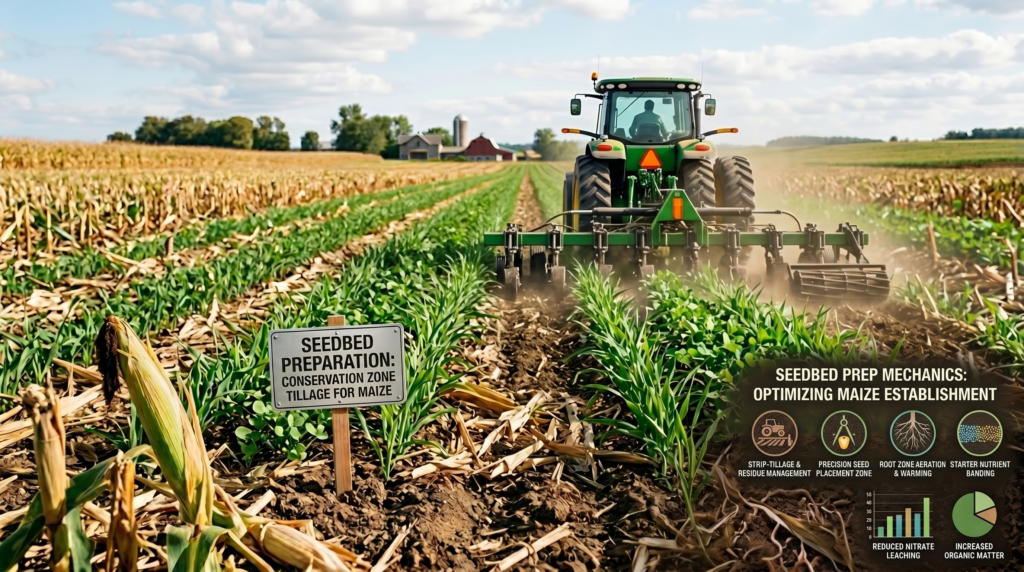
A well-prepared seedbed is the foundation of a successful maize crop. Maize seeds require close seed-to-soil contact for even germination, and the root system needs loose, uncompacted soil to develop fully.
- Deep cultivation (25–30 cm): Break up any subsoil compaction pan from previous cropping. Use subsoiler or deep plough where necessary.
- Primary tillage: Plough or disc to incorporate previous crop residues and weed seeds. Avoid creating a compaction layer at plough depth.
- Secondary tillage: Create a fine, firm seedbed using power harrow or combination drill. Avoid overworking — cloddy is better than dusty and prone to capping.
- Soil temperature check: Do not drill until soil temperature at seed depth (5 cm) has reached 10°C consistently for several days. Use a soil thermometer, not a calendar date alone.
“Getting your seedbed right is a skill that transfers across many crops — if you’d like to apply the same principles at home scale, our guide on growing strawberry plants covers soil preparation in a beginner-friendly way.”
Variety Selection
Which maize varieties should UK growers choose? Use varieties from the BSPB (British Society of Plant Breeders) Forage Maize Descriptive List for forage crops — this is the UK’s most authoritative independent source of variety performance data under UK conditions.
“Always select varieties from the BSPB 2026 Forage Maize Descriptive List — the UK’s most rigorous independent trials programme covering yield, dry matter, starch, and disease resistance under real UK growing conditions. The same principle of matching variety to site applies to all crops — see our strawberry growing guide for a home-scale example.”
Key selection criteria:
- FAO maturity rating: Lower FAO numbers = earlier maturity. UK conditions typically require varieties rated FAO 180–250 for reliable harvest. Southern England can accommodate FAO 250–300 in warm years.
- Dry matter content at harvest: Select for high DM at the expected harvest date. Silage maize should reach 30–35% DM; grain maize 60%+.
- Starch content: Higher starch = higher energy value in silage and grain. Critical for dairy and beef finishing rations.
- Disease resistance: Select for resistance to Fusarium ear rot and grey leaf spot, which are increasing in the UK.
- Standability: Avoid lodging-prone varieties, particularly in exposed western and northern sites.
Drilling and Establishment
| Parameter | Guidance | Notes |
|---|---|---|
| Target date | Late April to mid-May | When soil consistently 10°C+. Patience pays — never rush cold soils |
| Seed rate | 95,000–110,000 plants/ha | Adjust for soil type and target plant population. Light soils = higher rate |
| Drill depth | 4–5 cm | Consistent depth critical. Too shallow = risk of frost and bird damage |
| Row spacing | 75 cm (standard) | Narrower rows (50 cm) gaining interest for light interception |
| Strip tillage | Growing adoption in UK | Reduces soil disturbance, improves structure, retains organic matter, saves fuel |
Crop Nutrition — A Detailed UK Guide
Nutrition is the single biggest yield driver under UK grower control. The following table provides a complete reference for maize nutrient requirements based on AHDB RB209 guidelines and the latest 2025 UK trial data.
| Nutrient | Role | Typical Requirement (40 t/ha crop) | Key Risk / Notes |
|---|---|---|---|
| Nitrogen (N) | Yield, protein synthesis, leaf area index | Max 150 kg N/ha (NVZ farms). Starter N (20–50 kg N/ha) below seed at drilling; remainder top-dressed at 3-leaf stage | Excess N delays maturity; deficiency severely restricts yield. Slow-release foliar urea products showing value in 2025 UK trials (20 l/ha = equiv. 40 kg granular N/ha) |
| Phosphate (P) | Root development, energy transfer (ATP) | 55 kg/ha P2O5 removal for 40 t/ha crop. Place close to seed even where soil P is adequate | Cold soils restrict root uptake significantly. Starter P placement critical in UK spring conditions |
| Potassium (K) | Cob fill, osmoregulation, water use efficiency | 360 kg/ha K2O peak uptake by early August; 175 kg/ha removal at harvest | Most frequently underfed nutrient in UK maize crops. 8 kg/ha/day peak uptake during rapid growth phase |
| Sulphur (S) | Protein quality and chlorophyll function | Low to moderate requirement | Deficiency possible on sandy, low-OM soils. Apply as sulphate sulphur (immediately available) |
| Magnesium (Mg) | Chlorophyll, enzyme activation | Low to moderate | Risk on light, acidic soils especially after heavy rainfall leaching |
| Manganese (Mn) | Photosynthesis, enzyme activity | Trace — soil and foliar application | High pH soils restrict Mn availability. Deficiency identified in 2025 Carlisle trial leaf tests. Apply foliar Mn preventively |
Organic manures — slurry, farmyard manure (FYM), and digestate from AD plants — can meet a substantial proportion of maize nutrient demand. Full nutrient analysis of organic materials is essential before application to avoid both under-feeding and regulatory non-compliance.
Organic Manures vs Inorganic Fertilisers for Maize
| Advantages | Challenges / Limitations |
| + Supplies multiple nutrients simultaneously (N, P, K, Mg, S, trace elements) | – Variable nutrient content — analysis essential before each application |
| + Improves soil organic matter and structure over time | – NVZ closed periods restrict timing of slurry and FYM application |
| + Lower cost per unit of nutrient than bagged fertilisers | – Risk of phosphate runoff if applied ahead of forecast rainfall |
| + Digestate from AD plants: high N efficiency, nutrient-rich | – Logistics — storage capacity, spreading equipment, haulage distance |
| + Supports SFI and ELM environmental payment eligibility | – Pathogen risk with raw slurry — observe mandatory separation from watercourses |
Weed Control
What weeds are the biggest problem in UK maize? The most damaging weeds in UK maize crops are fat hen (Chenopodium album), black nightshade (Solanum nigrum), redshank (Persicaria maculosa), and creeping thistle (Cirsium arvense). Maize is a slow-establishing crop that offers limited early canopy cover, making effective weed control critical in the first eight weeks.
- Pre-emergence herbicides (applied immediately after drilling): Most important application timing. Residual products provide protection through the vulnerable early growth period.
- Post-emergence options: Available up to the 6-leaf stage of maize. A range of active substances targets broad-leaved weeds and some grasses.
- Integrated approach: Rotate herbicide modes of action to manage resistance. Avoid repeated use of ALS inhibitors.
| GROWER TIP | Maize as a blackgrass management tool: Maize is harvested late summer/autumn, creating a long spring planting window. This allows the use of stale seedbeds and pre-drilling herbicides for blackgrass before the maize crop is established — making maize a valuable strategic crop in blackgrass-infested arable rotations. |
Pest and Disease Management
What pests threaten UK maize crops? The following table summarises the key pest threats, their timing, and integrated management options.
| Pest / Disease | Risk Timing | Damage | Management |
|---|---|---|---|
| Slugs | Germination to 3-leaf | Seed destruction, seedling death | Slug pellets; avoid drilling into very wet, cloddy seedbeds |
| Wireworm | Emergence | Root and stem boring; stand loss | Greatest risk on ground following long-term grass. Rotation management |
| Leatherjackets | Emergence to 3-leaf | Root feeding; plant death | Risk on reseeded grass leys. Consider soil insecticide in high-risk situations |
| Frit fly | Young plant stage | Tillers and shoot damage | Higher risk on grassland sites. Insecticide seed treatment on highest-risk fields |
| European corn borer | Summer (pheromone trap monitoring) | Stem boring; lodging risk | Pherodis pheromone traps (Koppert UK) for monitoring. Biological control options emerging |
| Western corn rootworm | Biosecurity threat — not established in UK | Root destruction; severe lodging | Strict biosecurity; report suspected findings to APHA immediately |
| Fusarium / grey leaf spot | Summer–autumn | Leaf necrosis; ear rot | Resistant varieties; crop rotation; avoid maize-on-maize |
| BIOLOGICAL CONTROL | Koppert UK biological control products for maize: Capsanem (Steinernema carpocapsae nematodes for soil-dwelling larvae), Larvanem (Heterorhabditis bacteriophora for wireworm and chafer grubs), Trianum-G/P (Trichoderma harzianum for soil health and root disease suppression). These products support integrated pest management (IPM) and are compatible with Defra SFI requirements. |
Harvest
When should UK maize be harvested? Harvest timing is the most important decision of the season and directly determines silage or grain quality.
| End Use | Target Dry Matter % | Harvest Period (typical UK) | Key Quality Indicator |
|---|---|---|---|
| Wholecrop silage | 30–35% DM | Late September to November | Cob should be 50%+ of total crop DM at harvest for premium quality |
| Grain maize | 60%+ DM | October–November (southern England) | Wait for grain to fully dent and desiccate; combine when conditions allow |
| High-moisture grain (HMG) | 35–40% DM | September–October | Ensiled at high moisture in sealed clamp or grain bags — avoids drying costs |
Whole-crop maize for silage is harvested using a precision chop forage harvester, which simultaneously cuts, chops, and loads the crop into trailers. Correct chop length (typically 19 mm theoretical chop length) is important for clamp consolidation and rumen function.
Soil Protection After Harvest — Critical for Compliance and Soil Health
Maize is the highest-risk arable crop for soil erosion and phosphate runoff in the UK. The combination of late harvest (leaving soils bare through autumn), heavy harvesting machinery, and wide row spacing makes post-harvest management a legal and agronomic priority.
- Cover crops — Undersowing: Broadcast ryegrass or multispecies mix at the 3–4 leaf stage of maize (June). The cover establishes in the inter-row space and is ready to protect the soil immediately after harvest.
- Cover crops — Direct drill post-harvest: If undersowing was not used, direct drill a cover immediately after harvest. Ryegrass/fescue mixes or multispecies covers both work well.
- Cultivation after harvest: Immediate cultivation improves water infiltration and reduces surface runoff risk. Avoid leaving bare, compacted soil over winter.
- SFI CSAM2 payment: Defra’s Sustainable Farming Incentive pays £129/ha for establishing a multispecies cover crop after maize — a strong financial incentive for best practice.
Maize as Animal Feed in the UK
More than 70% of all maize used in the UK goes to animal feed. Maize silage, crimped maize, and grain maize are the three dominant feed forms, each with distinct nutritional profiles and practical applications on UK livestock farms.
Maize Silage — The Foundation of UK Dairy Rations
What is maize silage and why do UK dairy farmers use it? Maize silage is the whole maize plant — stalk, leaves, and cob — precision-chopped at 30–35% dry matter and fermented anaerobically in a clamp or silage bag. It is the dominant livestock forage application of maize in the UK.
- Metabolisable energy (ME): 11.0–11.5 MJ/kg DM — significantly more energy-dense than average grass silage (10.0–10.5 MJ/kg DM).
- 1 hectare of maize at 40 t/ha yield can supply the annual forage requirement for 6–10 dairy cows, depending on the proportion of the diet it constitutes.
- Protein is LOW: typically only 8% DM crude protein. Maize silage rations must always be supplemented with a source of rumen degradable protein (RDP) — soya bean meal, rapeseed meal, or protected protein products.
- Maize silage can constitute up to 75% of total forage dry matter in a dairy cow ration without negative effects, when protein supplementation is correct.
Crimped Maize — The Rising Star of UK Livestock Feeding
What is crimped maize and why is it growing in popularity? Crimped maize is whole or partially processed maize grain that is mechanically ‘cracked’ at 35–45% moisture content, mixed with an acid or inoculant preservative, and ensiled in a sealed clamp or bag. It is increasingly described by nutritionists as ‘rocket fuel’ for high-performance dairy cows and beef finishing cattle.
- ME: approximately 14.5 MJ/kg DM — substantially higher than maize silage and competitive with the best rolled barley rations.
- Starch digestibility: Crimping partially gelatinises starch granules, slowing rumen degradation rate. This supports more stable rumen pH, reducing the risk of acidosis in high-yielding dairy cows.
- On-farm production: Grain cracked, preservative applied, ensiled in clamp — product is ready for feeding in approximately three weeks.
- Local supply chains: Farmer-to-farmer supply of crimped maize grain avoids commercial drying costs (which consume energy and add CO2) and reduces transport-related carbon footprint.
- Eliminates drying costs: Commercial grain maize drying costs £15–30/tonne depending on energy prices. Crimping at high moisture removes this requirement entirely.
Grain Maize in UK Compound Feed
Dried grain maize is widely used in UK compound feeds for pigs, poultry, and dairy cattle. UK animal feed maize usage was up 6.7% on its five-year average in the 2024/25 marketing year, reflecting maize’s competitive price position relative to wheat and barley.
Maize grain is partially replacing barley and wheat in UK feed rations when price spreads make it competitive. Its high starch and energy content make it directly substitutable on a nutritional basis.
UK Maize Feed Comparison Table
| Feed Type | ME (MJ/kg DM) | Starch (% DM) | CP (% DM) | Best Livestock Application |
|---|---|---|---|---|
| Maize silage (quality) | 11.0–11.5 | 25–30% | ~8% | Dairy cows, beef cattle — high-energy forage base |
| Crimped maize grain | ~14.5 | 60–65% | ~8% | High-performance dairy, beef finishing — premium energy source |
| Grain maize (dried) | ~14.0 | 65–70% | ~8% | Poultry, pigs, compound feeds — high-starch energy ingredient |
| Maize gluten feed | ~11.5 | ~25% | ~22% | Dairy supplements — useful bypass protein and energy combination |
| Maize distillers grains (DDGS) | ~12.5 | ~10% | ~27% | Dairy — good source of bypass protein and digestible fibre |
Maize in Food & Nutrition
Maize is not just a farm crop — it is a significant part of the British diet, appearing in everything from breakfast cereals to gluten-free baking, summer barbecues to cinema snacks. This section covers the naming debate, nutritional profile, food culture, and health considerations for UK consumers.
Maize vs Corn: What Is the UK Difference?
This is one of the most commonly searched questions on the topic in the UK, and the answer is straightforward:
| Q: What is the difference between maize and corn in the UK? |
| A: In the UK, ‘maize’ refers to the plant and crop (Zea mays) in agricultural and scientific contexts. ‘Corn’ or ‘sweetcorn’ is the everyday name for the sweet edible form of the same plant. In the United States, ‘corn’ covers all forms of the species. The scientific name — Zea mays — is universal regardless of geography. Both words describe the same plant; the difference is regional naming convention, not botany. |
Nutritional Profile of Maize
Is maize healthy? Maize is a nutritious, whole-grain food that provides complex carbohydrates, dietary fibre, several B vitamins, and useful amounts of potassium. The following table shows the nutritional content of cooked sweetcorn (the most commonly consumed form in the UK).
| Nutrient | Per 100g Cooked Sweetcorn | % Approximate Daily Value |
|---|---|---|
| Calories | 86 kcal | 4% |
| Carbohydrates | 18.7 g | 7% |
| of which sugars | 3.2 g | — |
| Dietary Fibre | 2.0 g | 7% |
| Protein | 3.2 g | 6% |
| Fat | 1.2 g | 2% |
| Vitamin C | 6.8 mg | 8% |
| Folate (Vitamin B9) | 42 mcg | 11% |
| Thiamine (Vitamin B1) | 0.16 mg | 15% |
| Potassium | 270 mg | 6% |
| Magnesium | 26 mg | 6% |
| Phosphorus | 89 mg | 13% |
Key nutritional points for UK consumers:
- Gluten-free: Maize is naturally free from gluten, making maize flour, cornmeal, and polenta important staples for the estimated 1 in 100 UK people with coeliac disease and those following a gluten-free diet.
- Carotenoids: Yellow maize contains lutein and zeaxanthin — carotenoid pigments associated with eye health and reduced risk of age-related macular degeneration.
- Resistant starch: Cooked-then-cooled maize contains significant resistant starch, which feeds beneficial gut bacteria and supports glycaemic control.
- Whole vs processed: Whole maize and sweetcorn are nutritionally valuable. Heavily processed forms (cornflakes with added sugar, corn syrup, popcorn with heavy salt and butter) have very different nutritional profiles.
Maize in British Food Culture
Maize has been part of the British diet far longer than most people realise, and its presence is growing across multiple food categories.
“The trend toward eating more whole, home-grown foods is growing rapidly in the UK — discover how easy it is to start growing your own food at home.”
| Food Product | UK Market Status | Maize Form Used |
|---|---|---|
| Sweetcorn (fresh, tinned, frozen) | One of the UK’s top-selling vegetables; major BBQ staple | Zea mays saccharata |
| Cornflakes and breakfast cereals | A British breakfast institution since the early 20th century | Milled maize grain / flaked corn |
| Popcorn | One of the fastest-growing UK snack categories; cinema and home | Popcorn maize (Zea mays everta) |
| Corn tortillas and wraps | Growing rapidly with Mexican food popularity; gluten-free alternative | Nixtamalised maize flour (masa) |
| Polenta | Traditional Italian-inspired dish growing in UK popularity | Coarsely ground yellow maize |
| Cornflour / maize starch | Kitchen staple used to thicken sauces, soups, and desserts | Extracted maize endosperm starch |
| Gluten-free baking flour | Widely used in coeliac and free-from baking ranges | Fine maize flour |
| Bourbon whisky (imported) | US bourbon must be 51%+ maize by law; growing UK consumption | Fermented and distilled maize grain |
Health Considerations for UK Consumers
Are there any health concerns with maize? There are important distinctions between different forms of maize and their health impacts:
- Glycaemic index: Whole cooked sweetcorn has a moderate GI of approximately 52. Processed maize products — cornflakes, popcorn (plain), corn chips — have higher GIs and may cause faster blood glucose rises.
- High-fructose corn syrup (HFCS): Widely used in US processed foods as a cheap sweetener; its use is more restricted in the UK and EU, where sucrose (table sugar) remains the dominant food sweetener. Check ingredient labels on imported US products.
- Aflatoxin risk: In imported maize grain, particularly from warmer regions (USA, Argentina), aflatoxin contamination is a food safety concern. EU and UK regulations set strict maximum levels; reputable suppliers test all consignments.
- Pesticide residues: UK-grown sweetcorn produced under the farm assurance schemes (Red Tractor, Organic) is subject to residue monitoring. Buy UK-grown or certified produce for confidence.
Industrial and Bioenergy Uses of Maize in the UK
Beyond food and feed, maize plays a significant and often overlooked role in UK industrial production and the renewable energy sector. This section is unique among UK maize resources in covering these applications comprehensively.
Bioethanol — The Fuel Connection
What is maize bioethanol and how is it produced in the UK? Bioethanol is a biofuel produced by fermenting the sugars and starches in grain maize using yeast, then distilling the fermented liquid to high alcohol concentration. It is blended into petrol (UK E10 fuel standard, 10% ethanol), reducing fossil fuel dependency and lifecycle carbon emissions.
- Ensus, Teesside: The UK’s primary grain-maize-to-bioethanol facility, with capacity to process hundreds of thousands of tonnes of maize annually. In 2025/26 the plant received government support to maintain CO2 supply for the UK food and drinks industry.
- Vivergo, Hull: Closed August 2025 following the UK government’s removal of tariffs on US bioethanol imports, which reduced domestic plant competitiveness. This represents a structural contraction in UK industrial maize demand.
- The CO2 connection: Bioethanol production generates CO2 as a fermentation byproduct. This food-grade CO2 is critical to the UK fizzy drinks industry, food packaging (modified atmosphere), and meat processing sectors. The Ensus closure risk in 2025 prompted government intervention specifically because of CO2 supply concerns.
Anaerobic Digestion (AD) — Maize as Rural Energy
How does maize contribute to UK renewable energy? Whole-crop maize silage is one of the primary feedstocks for the UK’s network of farm-based anaerobic digesters (AD plants). Maize is valued in AD for its high-energy, high-starch composition, which produces biogas at high yields per tonne of feedstock.
- Process: Maize silage is fed into sealed digester tanks where microorganisms break down organic matter in the absence of oxygen, producing biogas (predominantly methane) and digestate.
- Outputs: Biogas drives CHP (combined heat and power) engines, generating electricity (fed to the grid) and heat (used on farm or locally). Digestate — the solid and liquid residues — is returned to farm land as a nutrient-rich organic fertiliser, closing the nutrient cycle.
- UK AD sector: Dozens of farm-based AD plants rely on maize silage as a primary or supplementary feedstock, contributing to rural energy security and generating income for farm businesses alongside food production.
Starch and Industrial Derivatives
Maize is the raw material for a broad range of industrial products. The wet milling process separates maize grain into its component fractions — starch, oil, protein, and fibre — each with distinct end markets.
| Maize-Derived Product | Source Process | Primary UK Industrial Use |
|---|---|---|
| Maize starch | Wet milling | Food manufacture (thickeners, confectionery); paper and textile sizing; pharmaceuticals |
| Maize oil (corn oil) | Germ extraction (wet milling) | Cooking oil; margarine; industrial lubricants; biodiesel |
| Corn syrup (glucose syrup) | Starch hydrolysis | Food manufacturing — confectionery, bakery, soft drinks |
| Maize gluten meal | Wet milling byproduct | High-protein animal feed ingredient; yellow pigment source (carotenoids) for poultry |
| Sorbitol | Starch hydrogenation | Pharmaceuticals — tablet excipient; confectionery — sugar-free products |
| Citric / lactic acid | Maize starch fermentation | Food preservatives; pharmaceuticals; biodegradable cleaning products |
| PLA (polylactic acid) | Fermentation of maize starch | Biodegradable packaging; compostable cups, bags, food containers |
The UK Maize Market — Data and Trends 2025/26
What is the current state of the UK maize market? This section provides the most current available data on UK maize production, imports, feed usage, and market outlook, citing AHDB supply and demand estimates and IndexBox market forecasting data.
UK Production
- Area grown: Maize is grown primarily in England and Wales. By 2020 the area in England exceeded 250,000 hectares — up from near zero in the 1970s. Scotland produces a small and variable quantity on lower-lying, more southerly sites.
- Dominant use: The large majority of UK-grown maize is forage maize, ensiled on-farm for livestock feeding. Grain maize for commercial sale is predominantly grown on warmer, drier sites in south and east England.
- Self-sufficiency: The UK is not self-sufficient in maize — domestic production of feed and industrial maize is insufficient to meet demand, requiring substantial imports.
UK Import Dependency
| Year | UK Maize Imports (Mt) | UK Feed Use (Mt) | Average Import Price | Key Driver |
|---|---|---|---|---|
| 2022/23 | 2.52 | 1.34 | High (post-Ukraine) | Post-Ukraine war supply disruption; elevated cereal prices |
| 2023/24 | 2.20 | 1.44 (est.) | Moderating | Bioethanol demand; feed wheat premium supporting maize use |
| 2024/25 | ~2.20 | ~1.44 | $308/t (March 2025) | Stable feed demand; bioethanol sector under pressure |
| 2025/26 (est.) | 2.15 | ~1.40 | Bearish outlook | Vivergo closure; global surplus forecast; price spread dynamics |
Key import origins for UK maize in 2025/26: France, Poland, Ukraine, Argentina, and USA. Supply chain diversification following the Russia-Ukraine conflict has increased UK sourcing from South America and expanded French domestic production contracted directly with UK importers.
Feed Usage Trends
- Maize used in GB animal feed (July–November 2024): up 6.7% on the five-year average, reflecting competitive pricing relative to feed wheat and barley.
- Maize is increasingly substituting wheat in UK compound feed rations when the feed wheat-to-maize price spread makes substitution economically rational. Formulation flexibility in UK feed mills means this switch can occur rapidly in response to market conditions.
- Global production (2025/26): forecast at a record +62.6 Mt increase in output, driven by a substantial rebound in US production following drought years. This significantly bearish production outlook is pressuring world maize prices lower in 2025/26.
Market Outlook to 2035
What is the long-term outlook for the UK maize market?
| MARKET FORECAST | UK maize market CAGR: +3.7% forecast through 2035 (IndexBox data).
UK market value: Projected to reach £1.1 billion by 2035, driven by sustained feed sector growth and emerging industrial uses. Volume: Forecast to reach 4 million tonnes by 2035. Climate expansion: Rising average UK temperatures are projected to expand the viable maize-growing zone northward, potentially opening significant new production area in northern England and southern Scotland. Risk factors: Bioethanol sector instability; import tariff policy (post-Brexit trade deals affecting US and South American origins); climate volatility. |
Sustainability, Environment & Policy
Maize is a productive and versatile crop, but it presents specific environmental challenges that UK growers, policy makers, and advisers must actively manage. This section addresses both the challenges and the solutions — including the UK government policy framework that now incentivises sustainable maize farming.
Environmental Challenges of Maize in the UK
Why is maize considered environmentally challenging in the UK? Maize poses a higher environmental risk than most UK arable crops due to a combination of factors that are largely intrinsic to how the crop is grown:
| Environmental Challenge | Cause | UK Impact |
|---|---|---|
| Soil erosion | Bare soil after harvest; wide rows (75 cm) throughout season; heavy harvesting machinery in wet autumn | UK’s highest-risk arable crop for topsoil loss and sediment runoff into watercourses |
| Phosphate runoff | P applied pre-drilling or as slurry; bare soil cannot absorb rainfall; slope and proximity to watercourses amplify risk | Key contributor to UK watercourse eutrophication; regulatory pressure increasing |
| Soil organic matter depletion | No year-round crop cover; repeated maize-on-maize strips and depletes OM; late harvest avoids over-winter root protection | Structural decline in repeated maize monoculture situations |
| Soil compaction | Heavy forage harvester, trailers, and tractor combinations at harvest, often in wet autumn conditions | Sub-surface compaction impedes drainage and root growth in following crops |
| Nitrate leaching | Post-harvest bare soils cannot take up residual nitrogen; autumn rains leach N to groundwater | NVZ regulations specifically address this; cover crops are the primary mitigation |
Sustainable Best Practices for UK Maize Growers
- Undersow a grass or multispecies cover crop: Broadcast into the maize canopy at the 3–4 leaf stage (mid-June). The cover establishes beneath the crop and provides immediate soil protection after harvest.”Crop rotation is one of the most powerful tools in any grower’s toolkit — whether farming maize at scale or managing a kitchen garden. For home growers, allium plants such as garlic and onions make an ideal follow-on crop after any cereal or grass-based system.” Best practice endorsed by AHDB, ADAS, and Defra.
- Establish a cover crop after harvest: If undersowing was not used, direct drill a cover immediately after harvest. Do not leave soil bare over winter.
- Rotate maize within the arable system: Following maize with winter wheat or a grass ley breaks pest cycles (wireworm, slugs), improves soil structure, and reduces disease carry-over.
- Use strip tillage: Reduces soil disturbance, preserves earthworm networks and soil structure, improves water infiltration, and reduces fuel costs.
- Apply precision nutrition: Commission soil analysis (N, P, K, pH, organic matter) before drilling. Use leaf tissue testing in-season to identify micronutrient deficiencies. Avoid luxury N applications.
- Manage watercourse margins: Maintain mandatory buffer strips; fence off watercourses from livestock; consider constructed wetlands on high-risk sites.
- Protect slopes: Install water courses, cross-slope grass barriers, and infiltration strips on steeply sloped maize fields draining to watercourses.
UK Policy Framework for Maize Growers
What UK government policies affect maize farming? The following policy frameworks directly affect UK maize growers:
| Policy | What It Requires / Offers | Impact on Maize Growers |
|---|---|---|
| Nitrate Vulnerable Zones (NVZs) | Maximum 150 kg N/ha from inorganic + organic N. Closed periods for slurry and FYM application. Mandatory N plans. | Most UK maize land is in NVZs. Restricts total N rate; mandates nutrient management planning. |
| Sustainable Farming Incentive (SFI) — CSAM2 | Pays £129/ha to establish multispecies cover crop after maize harvest. | Strong financial incentive to adopt best-practice post-harvest management. |
| Environmental Land Management (ELM) | Post-Brexit UK farm policy replacing Basic Payment Scheme. Pays for public goods: biodiversity, soil health, water quality, carbon. | Multiple ELM options relevant to maize growers — soil testing, cover crops, precision farming, water management. |
| Water Framework Directive (WFD) | UK retained regulation requiring improvement in watercourse ecological status. | Drives regulatory pressure to reduce phosphate and sediment runoff from maize fields. Risk of enforcement on high-runoff sites. |
| Farming Rules for Water (FRfW) | Prohibit application of organic manures if significant risk of runoff. Buffer zones mandated. | Directly constrains slurry and digestate application timing and proximity to watercourses on maize fields. |
Climate Resilience and the Future of UK Maize
The UK’s climate trajectory is broadly positive for maize expansion. Met Office projections show continued warming across all UK regions, with mean summer temperatures rising by 0.5–2°C by 2050 under moderate emissions scenarios. This will progressively extend the growing season in northern England, Wales, and parts of southern Scotland — opening new areas to commercial maize production.
New variety development is accelerating this expansion further. Breeders in Germany, France, and the Netherlands — all with climates comparable to parts of the UK — are developing varieties with lower FAO maturity ratings, higher cold tolerance at emergence, and improved starch accumulation in cooler conditions. These varieties will provide UK growers with more options and more reliability across a wider geography.
On sustainability, the long-term viability of UK maize farming depends on resolving the tension between its productivity advantages and its environmental footprint. The policy framework — SFI, ELM, NVZ rules — is increasingly aligned to reward growers who manage maize sustainably. Financially viable maize farming and environmental responsibility are not in conflict; the evidence from the best-managed UK maize farms demonstrates that both are achievable together.
Frequently Asked Questions — People Also Ask
The following Q&A blocks are designed to directly answer the most commonly searched questions about maize in the UK, as identified from Google’s People Also Ask boxes and search intent data.
| Q: What is the difference between maize and corn? |
| A: In the UK, ‘maize’ refers to the crop and plant (Zea mays) in agricultural and scientific contexts. ‘Corn’ or ‘sweetcorn’ is the everyday name for the sweet vegetable form. In the United States, ‘corn’ covers all forms — the plant, the grain, and the sweet variety. Both names refer to the same species, Zea mays. The scientific name is universal. The difference is purely a regional naming convention, not a botanical distinction. |
| Q: Can you grow maize in the UK? |
| A: Yes — maize is grown commercially across most of England and Wales, covering more than 200,000 hectares. Success depends on site selection: land should ideally be below 400 feet (120 m) altitude, south-facing where possible, with free-draining soil and a pH of at least 5.0 (target 6.5). Soil temperature must consistently reach 10°C at seed depth before drilling, which typically means late April to mid-May across most UK regions. Select varieties with an appropriate FAO maturity rating (FAO 180–250 for most of England and Wales) from the BSPB Forage Maize Descriptive List. |
| Q: What is maize used for in the UK? |
| A: Maize in the UK is used primarily as animal feed (over 70% of total use), in three main forms: maize silage (whole-plant forage for dairy and beef cattle), crimped maize grain (high-energy preserved grain for dairy and finishing livestock), and dried grain maize (ingredient in compound feeds for pigs and poultry). Maize is also a bioenergy feedstock for UK anaerobic digestion plants and, to a smaller extent, for bioethanol production. In food, UK consumers eat sweetcorn, cornflakes, popcorn, cornflour, polenta, and gluten-free products derived from maize. |
| Q: Is maize gluten-free? |
A: Yes. Maize and all pure maize flours are naturally gluten-free, making them a valuable dietary staple for the estimated 1 in 100 people in the UK with coeliac disease and for those following a gluten-free diet. Maize flour, cornmeal, polenta, and cornflour are all safe for coeliacs when purchased pure and uncontaminated. However, always check packaging on processed maize products — cross-contamination with wheat, barley, or rye can occur in facilities that process multiple grains. Look for the Crossed Grain symbol (Coeliac UK certification) for guaranteed safety.
|
| Q: When is maize harvested in the UK? |
| A: UK maize for silage is typically harvested between late September and early November, when the whole crop reaches 30–35% dry matter (DM). The cob should represent at least 50% of total crop DM at harvest for premium silage quality. In warmer years and in southern England, harvest can begin in mid-September. In northern and western regions, or in cool, wet years, harvest may extend into November — raising the risk of soil damage from heavy machinery in wet conditions. Grain maize is harvested later, when the grain reaches 60%+ DM, typically in October–November in suitable southern sites. |
| Q: Why is maize bad for soil in the UK? |
| A: Maize is the highest-risk arable crop for soil erosion and phosphate runoff in the UK. The combination of wide row spacing (75 cm), which leaves large areas of bare soil throughout the growing season, late harvest into autumn when soils are wet and vulnerable, and heavy harvesting machinery creates serious erosion, compaction, and nutrient runoff risks. These are not inevitable — they are manageable. Undersowing a grass or cover crop, establishing a multispecies cover after harvest (now incentivised by Defra SFI payments of £129/ha via CSAM2), and using strip tillage and precision nutrition significantly reduce the environmental footprint of UK maize. |
| Q: What is the nutritional value of maize? |
| A: Per 100g of cooked sweetcorn, maize provides approximately 86 kcal, 18.7g carbohydrate, 3.2g protein, 1.2g fat, and 2.0g dietary fibre. It is a useful source of folate (B9), thiamine (B1), vitamin C, potassium, magnesium, and phosphorus. Yellow maize also contains the carotenoids lutein and zeaxanthin, which support eye health. Maize is naturally gluten-free. The nutritional value of processed maize products (cornflakes, corn chips, corn syrup) varies widely and is strongly influenced by added sugar, salt, and fat. |
| Q: How much does it cost to grow maize in the UK? |
| A: Variable costs of growing maize in the UK typically range from £500–£800 per hectare depending on location, soil type, establishment method, and fertiliser prices. Key cost items include seeds (£60–£120/ha for commercial forage varieties), fertiliser (£150–£250/ha depending on soil index and organic manure availability), herbicides (£80–£150/ha for a full programme), and establishment (£60–£120/ha for power harrowing and precision drilling). Against these costs, forage maize typically delivers 35–50 tonnes fresh weight per hectare, with a farm gate forage value of £30–50/tonne dry matter. Cover crop costs (c. £30–50/ha) should be factored in; SFI CSAM2 payments of £129/ha offset these. |
Conclusion and Key Takeaways
Maize is one of the most versatile, productive, and economically significant crops in the UK agricultural system — and its importance continues to grow. From its ancient origins in Mesoamerican agriculture to its position today as England and Wales’s dominant forage crop and a growing contributor to rural energy supply, maize’s UK story is one of rapid, climate-driven, demand-led transformation.
For UK growers, the evidence is clear: success with maize depends on matching variety to site, respecting the crop’s temperature requirements, investing in crop nutrition, and — critically — managing the post-harvest period to protect soils and watercourses. The policy environment now actively rewards growers who get this right, through SFI payments for cover crops, ELM support for precision farming, and a regulatory framework that increasingly distinguishes between responsible and damaging maize management.
For UK consumers and food writers, maize is already a daily presence in ways that may not always be visible — in the cornflakes at breakfast, the sweetcorn in a summer salad, the modified atmosphere packaging keeping food fresh, and the bioethanol blended into the petrol in the car. Understanding maize’s journey from field to plate (and field to fuel) is to understand a significant strand of modern British food and energy systems.
The UK maize market faces short-term structural challenges — the contraction of the domestic bioethanol sector and global price pressure from large South American and US harvests — but the long-term fundamentals remain strong. Demand from the dairy sector, the AD industry, the compound feed industry, and increasingly from the human food sector shows no sign of declining.
| KEY TAKEAWAYS | Maize (Zea mays) grew from 20,000 acres in 1973 to over 450,000 acres by 2016 in the UK — one of the fastest crop expansions in British agricultural history.
Over 70% of UK maize use is animal feed (silage, crimped grain, dried grain). Bioenergy and food are the next largest categories. Successful UK maize production requires: correct variety (FAO 180–250 for most regions), delayed drilling until soil reaches 10°C, balanced nutrition (K is most frequently underfed), and post-harvest cover cropping. UK maize imports are forecast at 2.15 Mt in 2025/26, down 31% year-on-year, primarily due to bioethanol sector contraction. Feed use remains robust. Sustainable maize farming — cover crops, rotation, precision nutrition, SFI payments — is both commercially viable and environmentally necessary. For consumers: maize is naturally gluten-free, nutritionally valuable, and already present in hundreds of everyday British food products. |
Continue Reading: Related Articles in This Series
| Article Title | Topic Area | Target Keyword |
|---|---|---|
| Best Maize Varieties for UK Growers 2026 | Growing & Agronomy | maize varieties UK 2026 |
| Maize Silage: A UK Farmer’s Complete Guide | Animal Feed | maize silage UK |
| UK Maize Market Outlook 2025/26 | Market & Trade | UK maize market 2025 |
| Is Maize Healthy? A UK Nutritionist’s Guide | Food & Nutrition | is maize healthy UK |
| SFI Payments for Maize Growers Explained | Policy & Sustainability | SFI maize growers |
| Maize Pests & Diseases in the UK | Growing & Agronomy | maize pests UK |
| UK Bioethanol and Maize: What Farmers Need to Know | Bioenergy & Industry | maize bioethanol UK |

Leave a Reply