
A money plant is a common name used for several easy-care houseplants believed to symbolise prosperity and growth.
In the UK, the term most often refers to pothos (Devil’s Ivy), but it may also mean Chinese money plant (Pilea), jade plant, or money tree.
Quick Summary
- ✔ Not a single plant species
- ✔ Popular indoor plant in UK homes
- ✔ Known for low maintenance and adaptability
- ✔ Associated with wealth, luck, and growth
What Is a Money Plant?
“Money plant” is a non-scientific term used to describe multiple houseplants with coin-shaped leaves or symbolic associations with wealth.
Common Types Called “Money Plant”
- Pothos (Epipremnum aureum) – most common in UK homes
- Chinese Money Plant (Pilea peperomioides) – round leaves
- Jade Plant (Crassula ovata) – succulent
- Money Tree (Pachira aquatica) – braided trunk
Q&A: What Is a Money Plant?
Q: Is money plant one specific plant?
A: No. It’s a general name used for several different plants.
Q: Which money plant is most common in the UK?
A: Pothos (Devil’s Ivy) is the most common indoor variety.
Types of Money Plants (UK Guide)
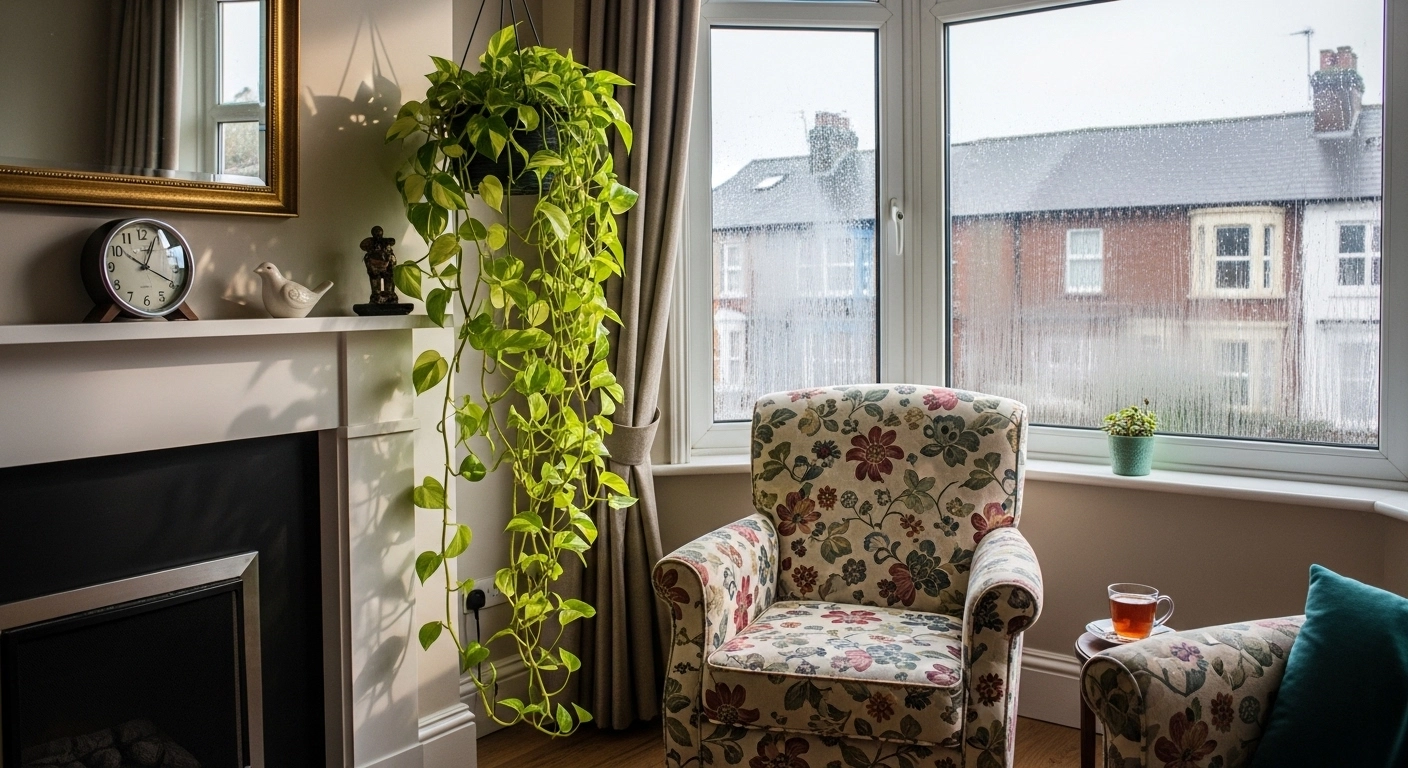
1. Pothos (Devil’s Ivy)
Pothos is a trailing vine with heart-shaped leaves and is the easiest money plant to grow indoors.
Pros
- Extremely low maintenance
- Tolerates low light
- Fast growing
Cons
- Can become leggy in very low light
- Toxic to pets
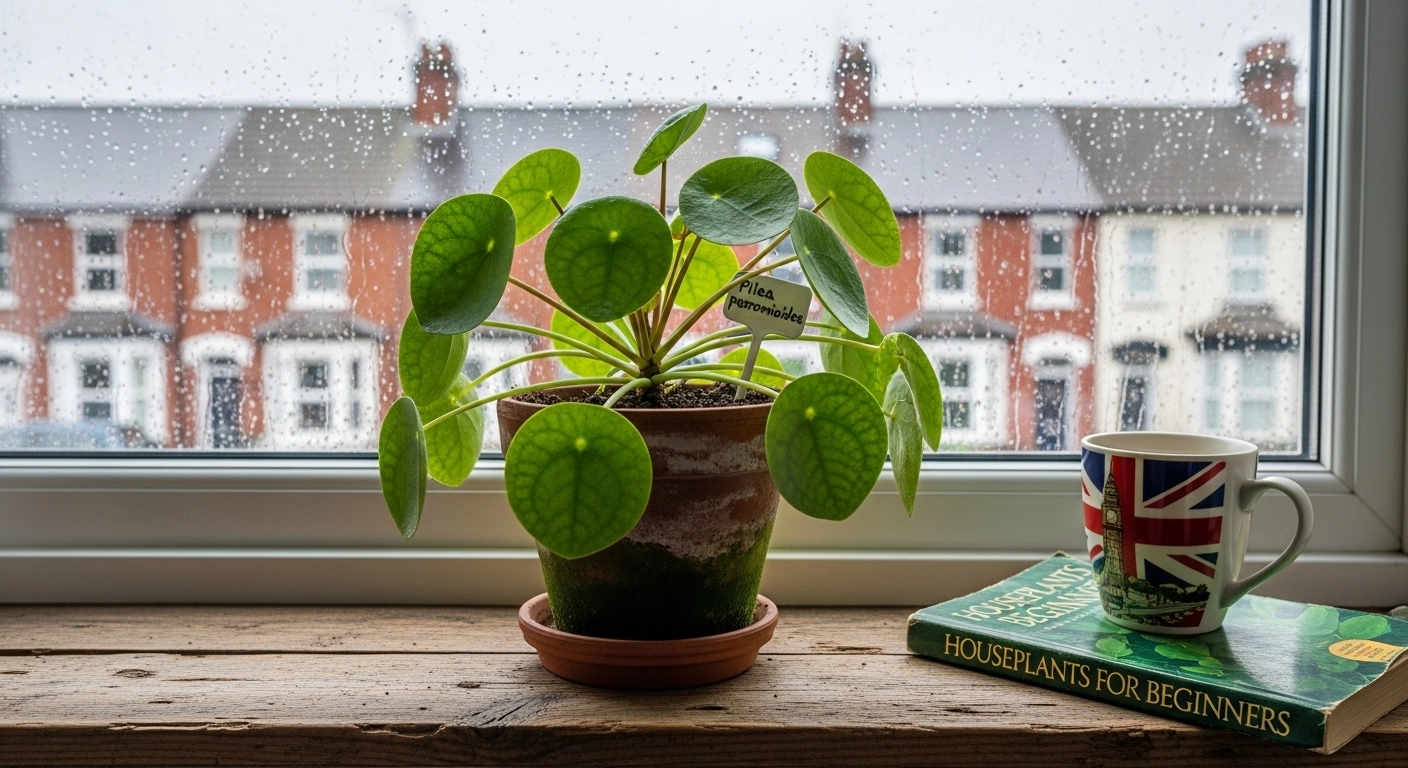
2. Chinese Money Plant (Pilea)
Pilea is a compact plant with round, coin-like leaves ideal for small spaces.
Pros
- Attractive and modern look
- Easy to propagate
Cons
- Needs bright indirect light
- Slower growth
3. Jade Plant
Jade is a succulent money plant that requires bright light and minimal watering.
Pros
- Very low watering needs
- Long lifespan
Cons
- Needs sunlight
- Slow growing
4. Money Tree
Money tree is a decorative indoor plant with a braided trunk and symbolic value.
Comparison Table
| Plant Type | Light Needs | Watering | Difficulty | Best For |
|---|---|---|---|---|
| Pothos | Low–Medium | Moderate | Very Easy | Beginners |
| Pilea | Bright indirect | Moderate | Easy | Small homes |
| Jade | Bright | Low | Easy | Sunny rooms |
| Money Tree | Medium | Moderate | Medium | Decor |
Money Plant Care in the UK (Climate-Specific)
Money plant care in the UK requires adapting to low sunlight, indoor heating, and seasonal changes.
Light Requirements
- Place near east or west-facing windows
- Avoid direct harsh sunlight
- Survives low light but grows slower
Watering Guide (UK Conditions)
Step-by-Step
- Check soil dryness (top 2–3 cm)
- Water only when dry
- Reduce watering in winter
Seasonal Guide
- Summer: every 7–10 days
- Winter: every 10–14 days
Temperature & Humidity
- Ideal: 15–25°C
- Avoid radiators and cold drafts
- Mist occasionally in dry homes
Soil Requirements
- Well-draining potting mix
- Add perlite for airflow
Seasonal Care Calendar
| Season | Care Action |
|---|---|
| Spring | Start fertilising |
| Summer | Regular watering |
| Autumn | Reduce feeding |
| Winter | Minimal watering |
How to Propagate Money Plant
Definition
Propagation is the process of growing a new plant from a cutting of an existing plant.
Water Propagation (Step-by-Step)
- Cut below a node
- Place in water
- Keep in indirect light
- Wait 1–3 weeks for roots
Soil Propagation
- Take cutting with node
- Plant in moist soil
- Keep warm and humid
Q&A: How Does Propagation Work?
Q: Why is a node important?
A: Roots only grow from nodes, not plain stems.
Benefits of Money Plants
Money plants are valued for their ease of care, decorative appeal, and psychological benefits.
Key Benefits
- Improves indoor aesthetics
- Beginner-friendly
- Can boost mood and reduce stress
Myth vs Reality
| Claim | Reality |
|---|---|
| Purifies air completely | Limited effect indoors |
| Brings wealth | Cultural belief, not scientific |
Symbolism & Meaning
Money plants symbolise wealth, prosperity, and growth in many cultures.
Feng Shui Placement Tips
- South-east corner (wealth area)
- Near entrance for positive energy
UK Perspective
- Seen more as decorative than spiritual
Common Problems & Solutions
Quick Diagnosis Table
| Problem | Cause | Solution |
|---|---|---|
| Yellow leaves | Overwatering | Reduce watering |
| Drooping | Underwatering | Water thoroughly |
| Brown spots | Sunburn | Move to indirect light |
| Leggy growth | Low light | Increase light exposure |
Q&A: Why Is My Money Plant Dying?
Answer:
Most cases are due to:
- Overwatering
- Poor lighting
- Temperature stress
Best Placement in UK Homes
Ideal Locations
- Living room
- Bedroom
- Office desk
Avoid
- Radiators
- Drafty windows
Buying Guide (UK)
What to Check Before Buying
- Healthy green leaves
- No pests
- Good root condition
Best Choice for Beginners
Pothos is the best money plant for UK beginners due to its adaptability.
FAQ Section
What is a money plant?
A money plant is a common name for several indoor plants associated with prosperity, such as pothos and Pilea.
How often should I water a money plant in the UK?
Water every 7–10 days in summer and 10–14 days in winter.
Can money plant survive UK winter?
Yes, if kept indoors away from cold drafts.
Is money plant good for bedrooms?
Yes, it tolerates low light and improves aesthetics.
Is money plant toxic to pets?
Yes, pothos is toxic to cats and dogs.
Check Expert Tips Here
- Rotate plant weekly for even growth
- Use pots with drainage holes
- Avoid over-fertilising
Conclusion
Money plants are one of the easiest and most rewarding indoor plants for UK homes. Whether you choose pothos, Pilea, or jade, success comes down to proper light, careful watering, and seasonal adjustments.

Leave a Reply